Just in Case It Works
Xiaowei Zhu
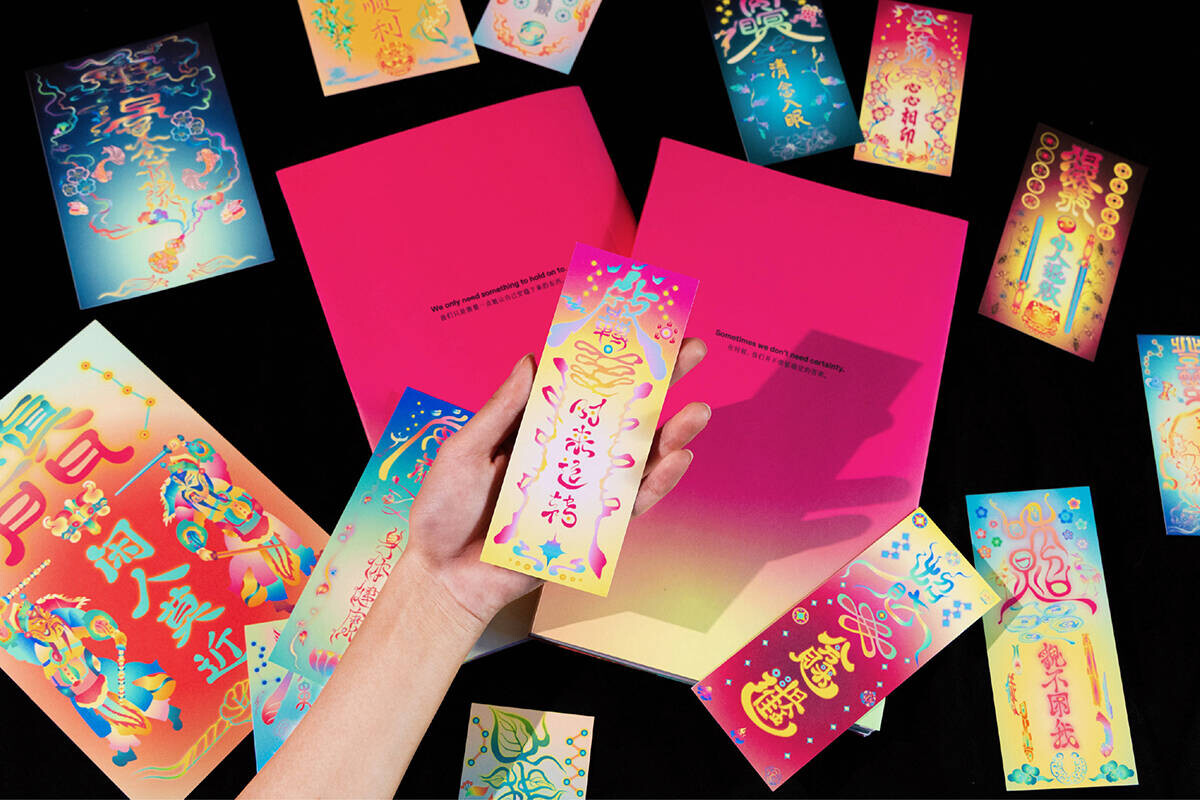
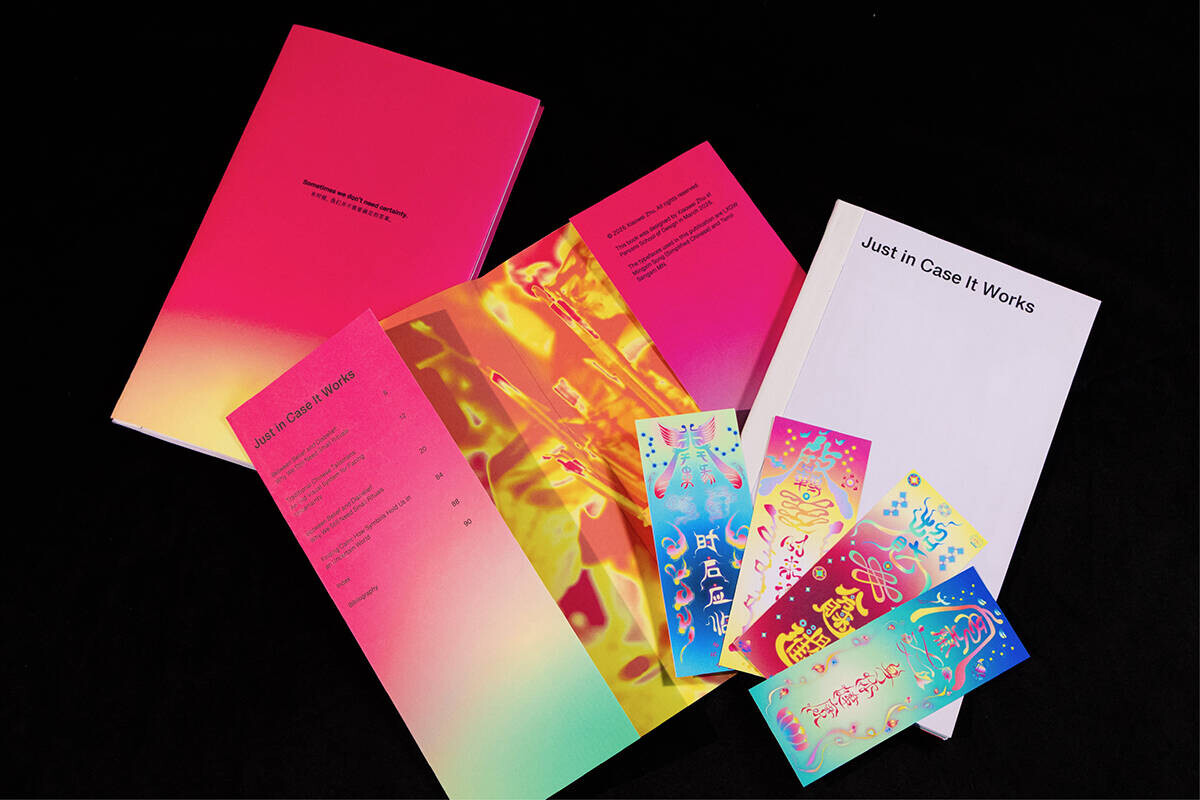
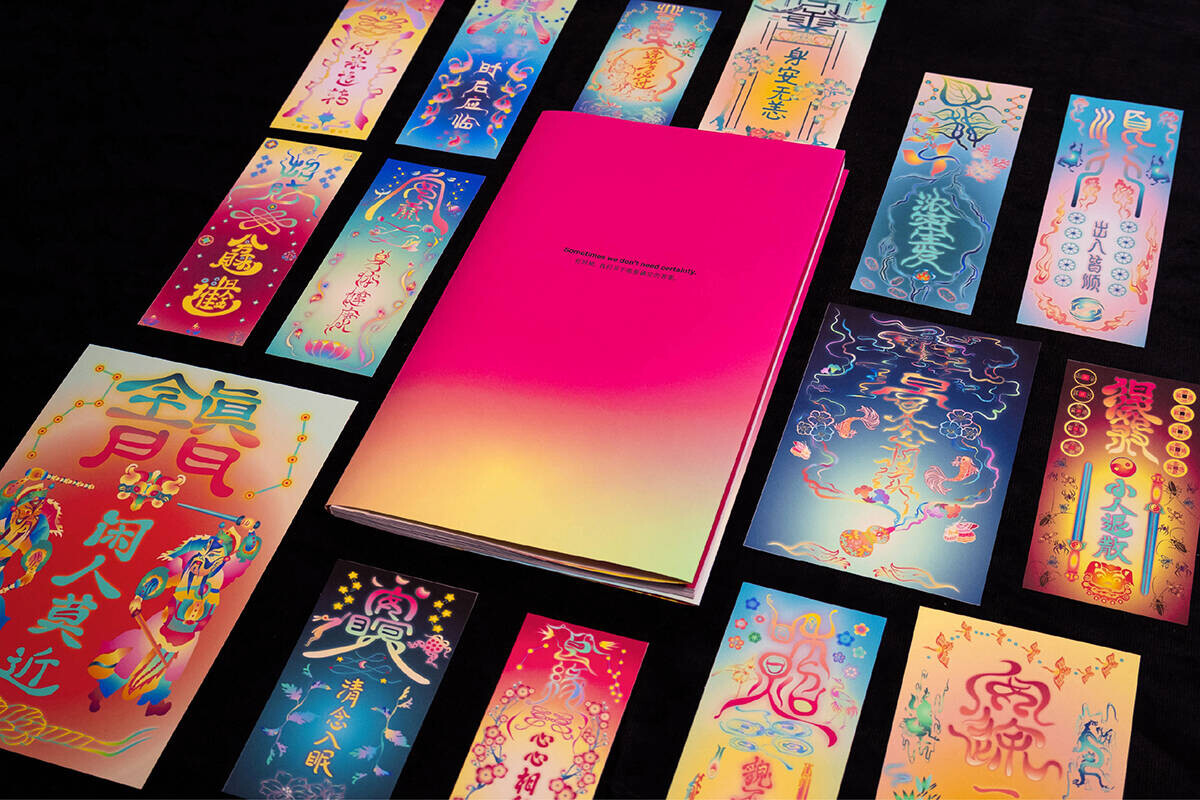
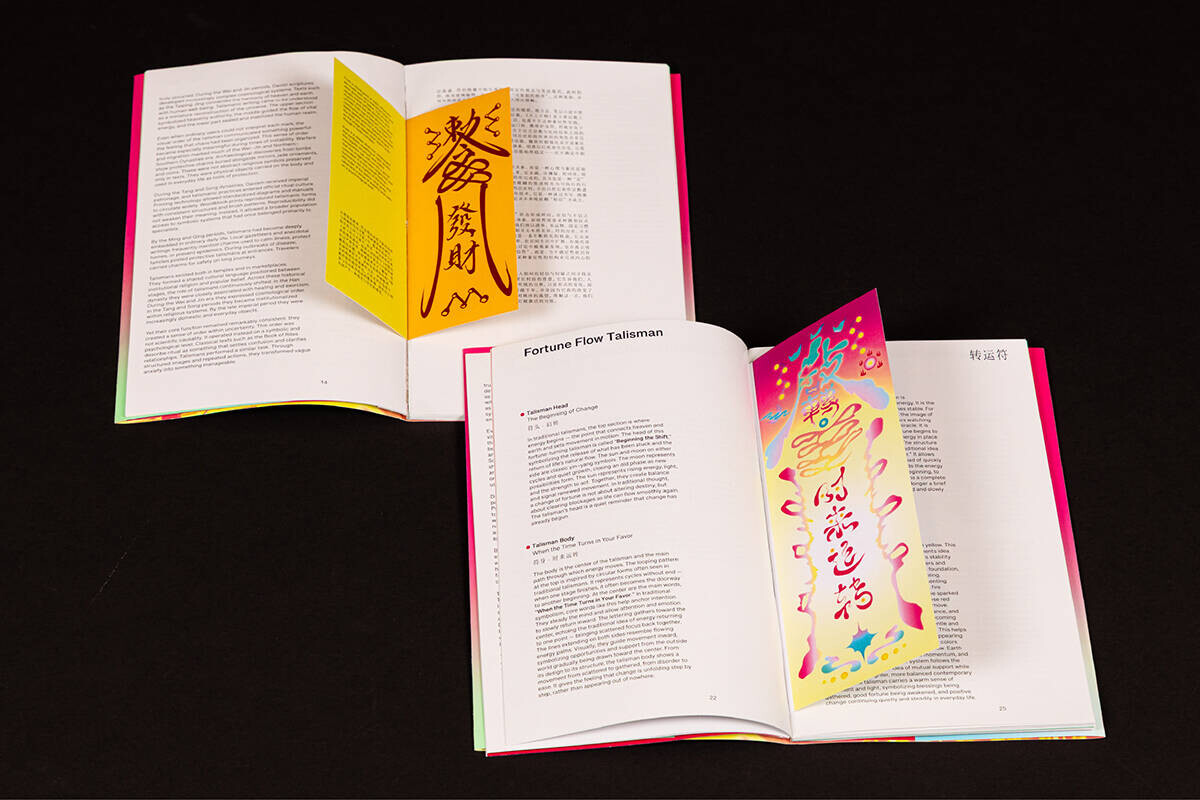
In an uncertain world, more and more young people turn to small spiritual rituals that exist somewhere between belief and doubt, seeking brief moments of emotional comfort. These practices are often less about supernatural belief than about creating a personal way to steady emotions when facing pressure and uncertainty. This project begins from this contemporary phenomenon to explore why young people are drawn to these rituals and how they function as quiet forms of psychological reassurance in everyday life.
In Chinese culture, paper talismans originate from Daoist and folk traditions and exist as both visual and ritual objects. Traditionally written with cinnabar ink on yellow paper, they follow distinct visual structures and symbolic systems and have long been used by people to seek protection, better fortune, or a sense of certainty when facing the unknown. Today, however, talismans are often dismissed as superstition and are no longer closely connected to the lives of younger generations.
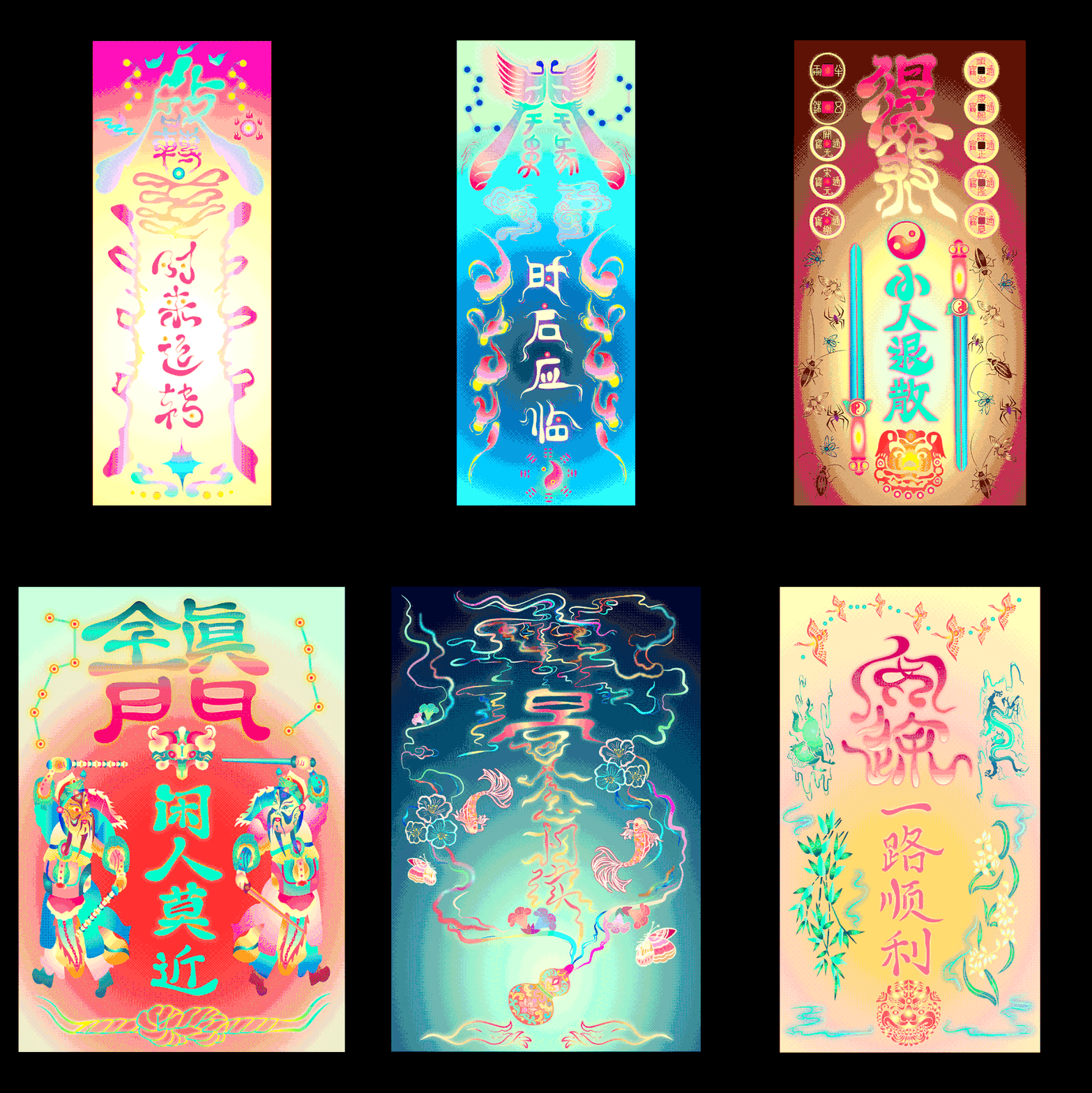
This project responds by reexamining talismans through design. The work takes the form of a visual archive book combined with a set of contemporary talisman cards. By studying the historical context and visual logic of traditional Chinese talismans, the project reinterprets their symbolic structure through a contemporary visual language, connecting them to the real anxieties and everyday struggles young people face today. Rather than promoting religious belief, the project explores how design can transform traditional cultural symbols into accessible forms of emotional support.