Sick Labor
Elin Nakayama
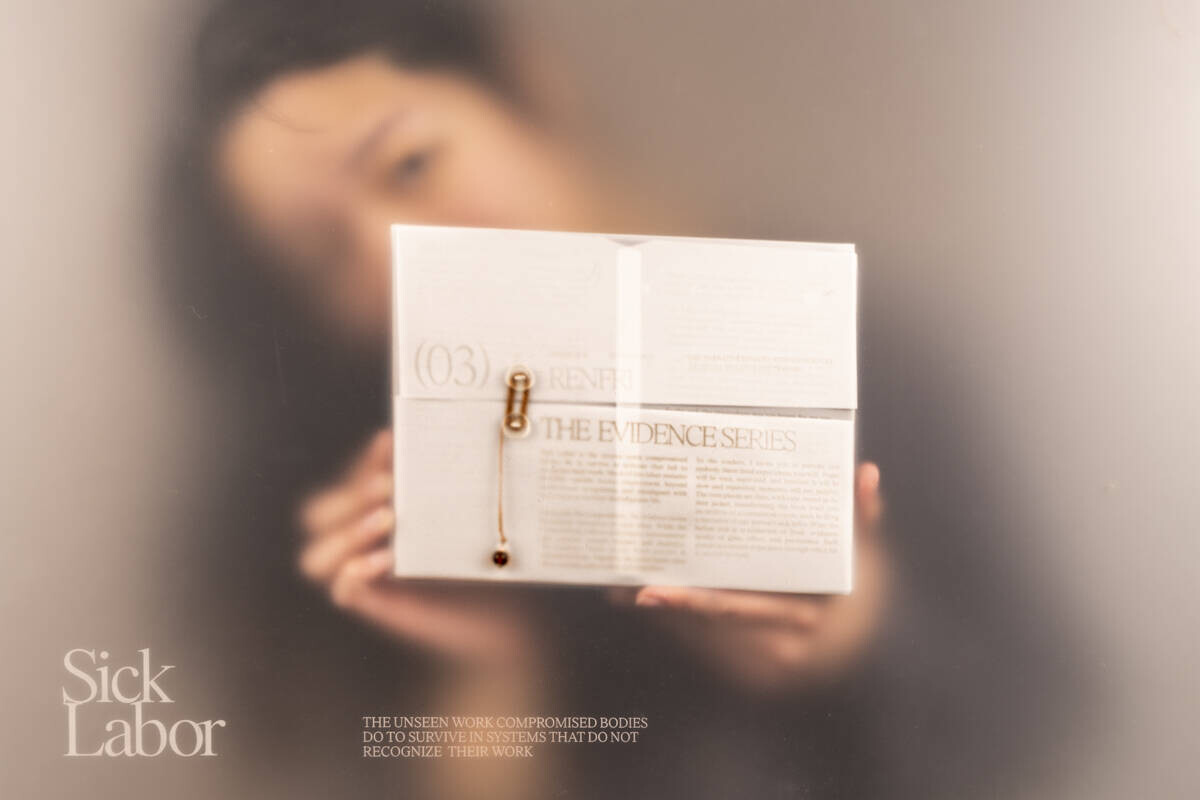
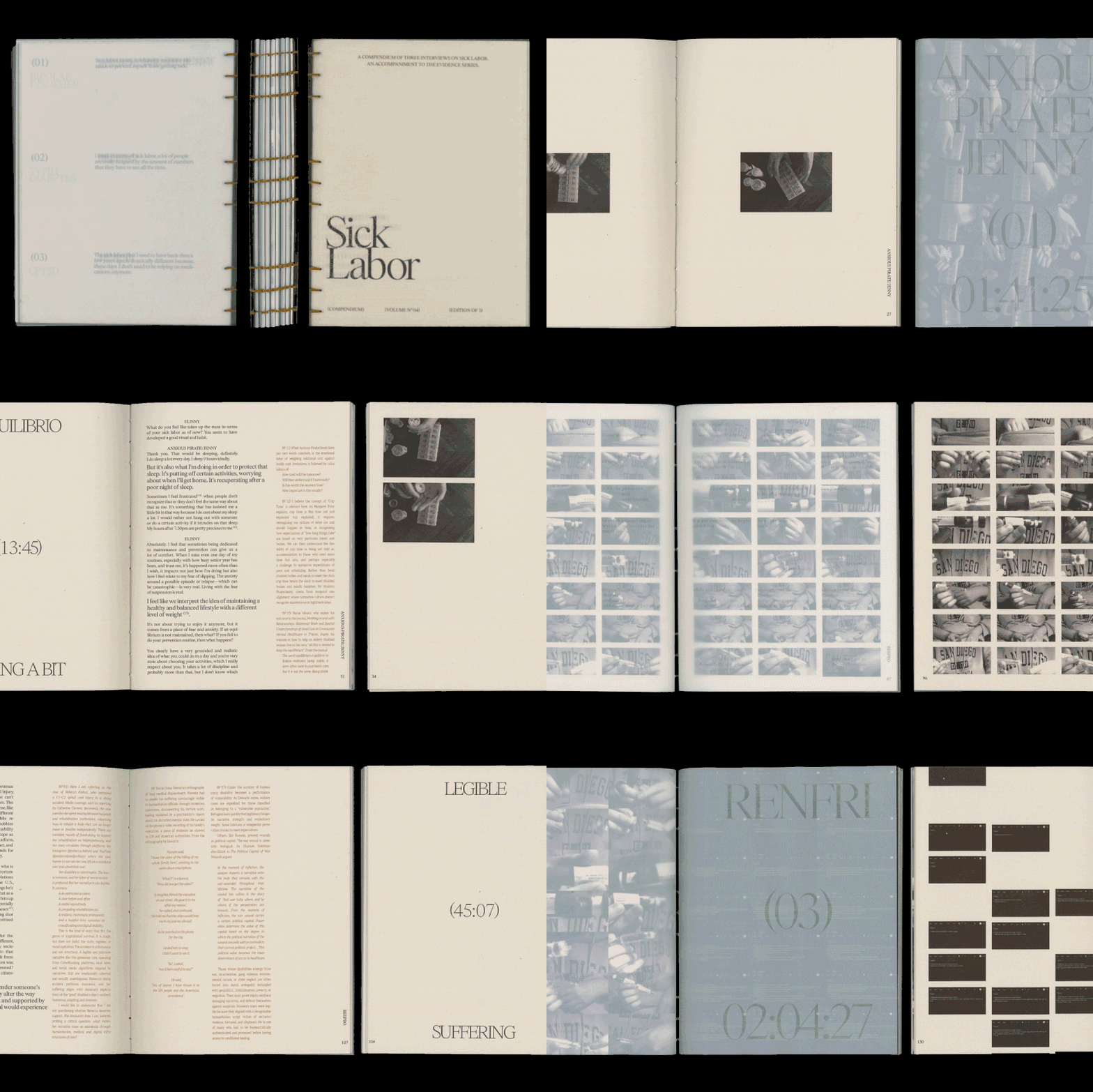
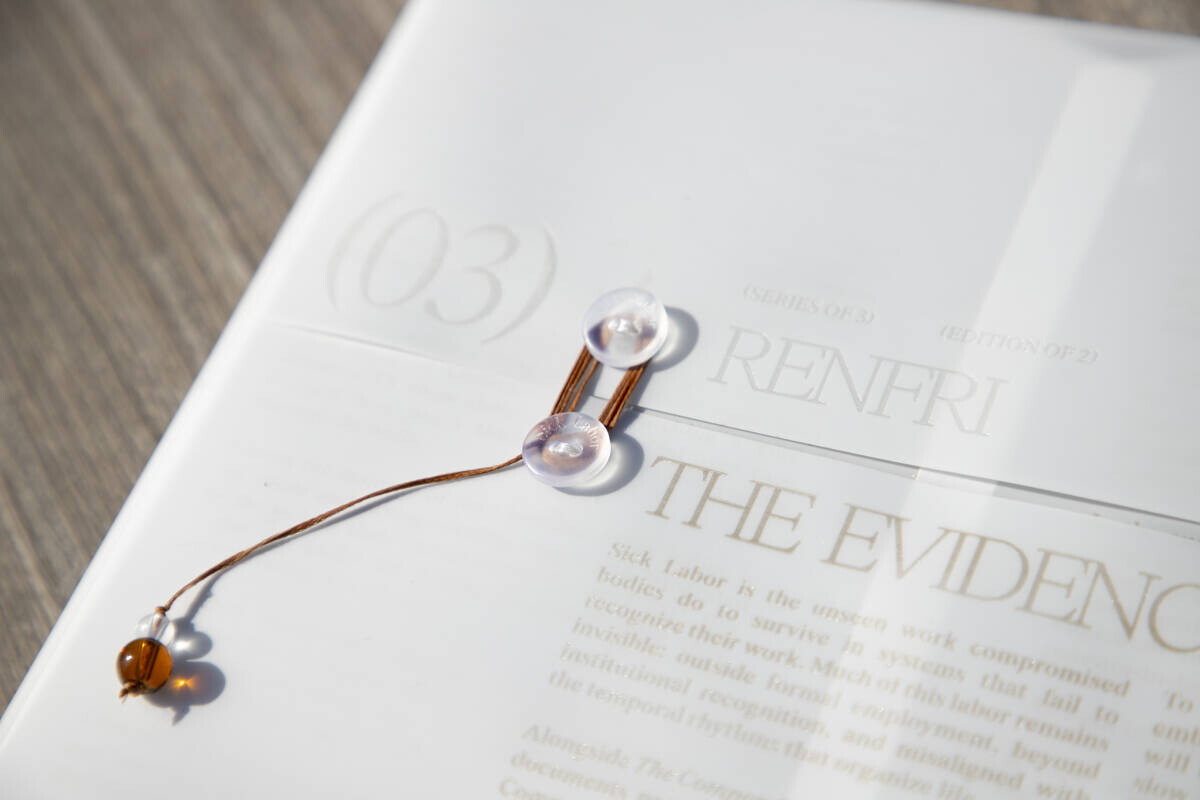
Sick labor, in this project, refers to the continuous, often invisible work required to live with illness, disability, or compromised bodies. Grounded in the lived experiences of three individuals, it centers experience rather than diagnosis through long-form interviews and films. Where medical systems document symptoms and treatment, this work focuses on what remains unrecorded: the unquantifiable, ongoing labor of sustaining a life.
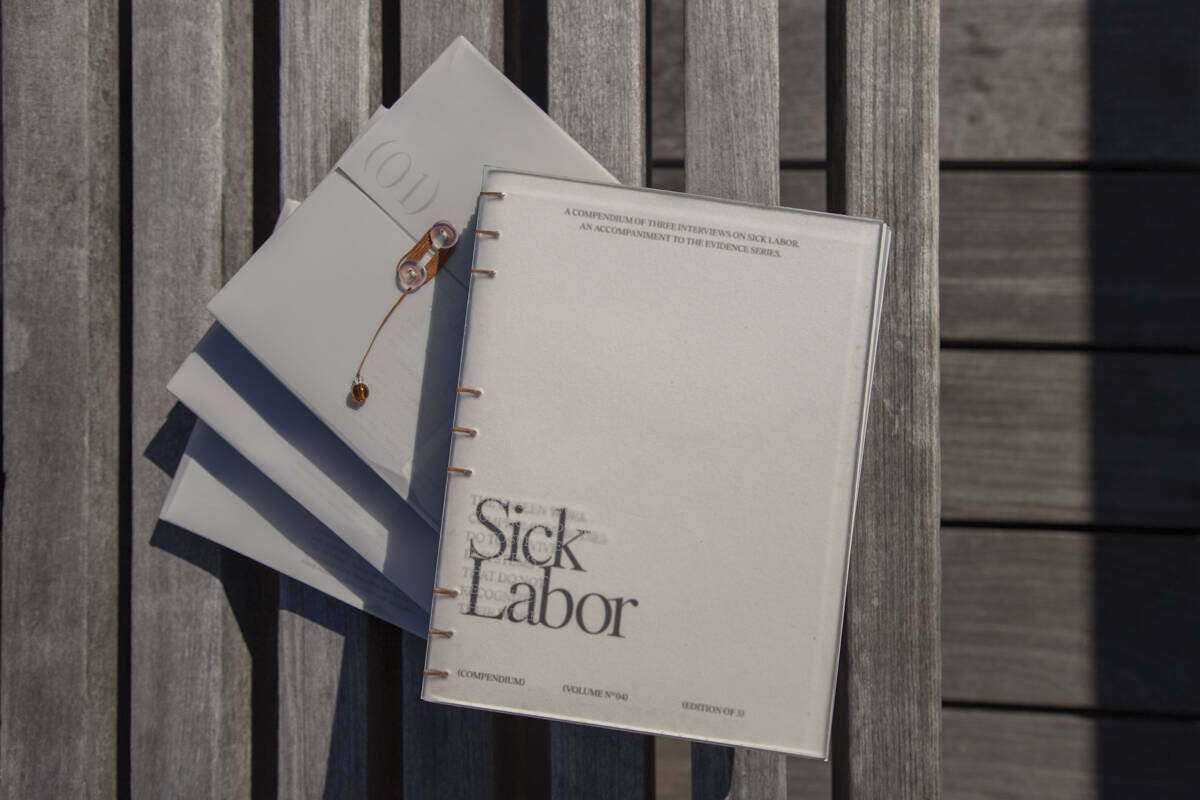
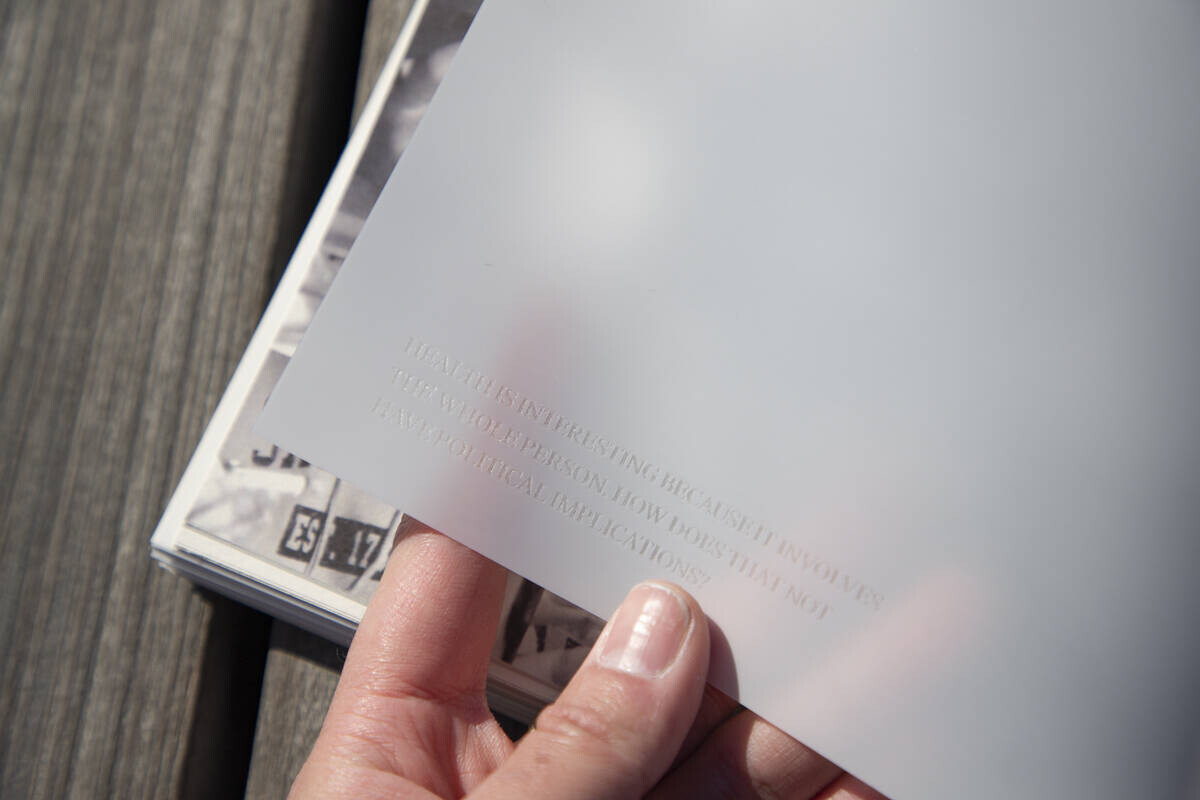
The project unfolds through a series of publications that hold a tension between disappearance and preservation. The interactive book, The Evidence Series, invites readers to embody this labor. By tearing through its pages to access the content, readers embody labors of repetition, exhaustion, and loss. The resulting fragments become evidence of living, collected and kept within a dust jacket that transforms the book into an accumulating archive of labor. In contrast, the archival publication, The Compendium, preserves full interview transcripts to honor the integrity of spoken words. It is accompanied by annotations from medical anthropology and crip studies, opening space for critical reflection and reimagining how sick labor might be understood.
This thesis challenges dominant frameworks that treat illness as a static condition rather than ongoing labor. It is for those who live this labor and rarely see it rendered with care, and for those who have never been required to notice it. Ultimately, the project insists that sick labor is structural, embodied, and worthy of recognition and preservation.