Under
Jiaxin Chen
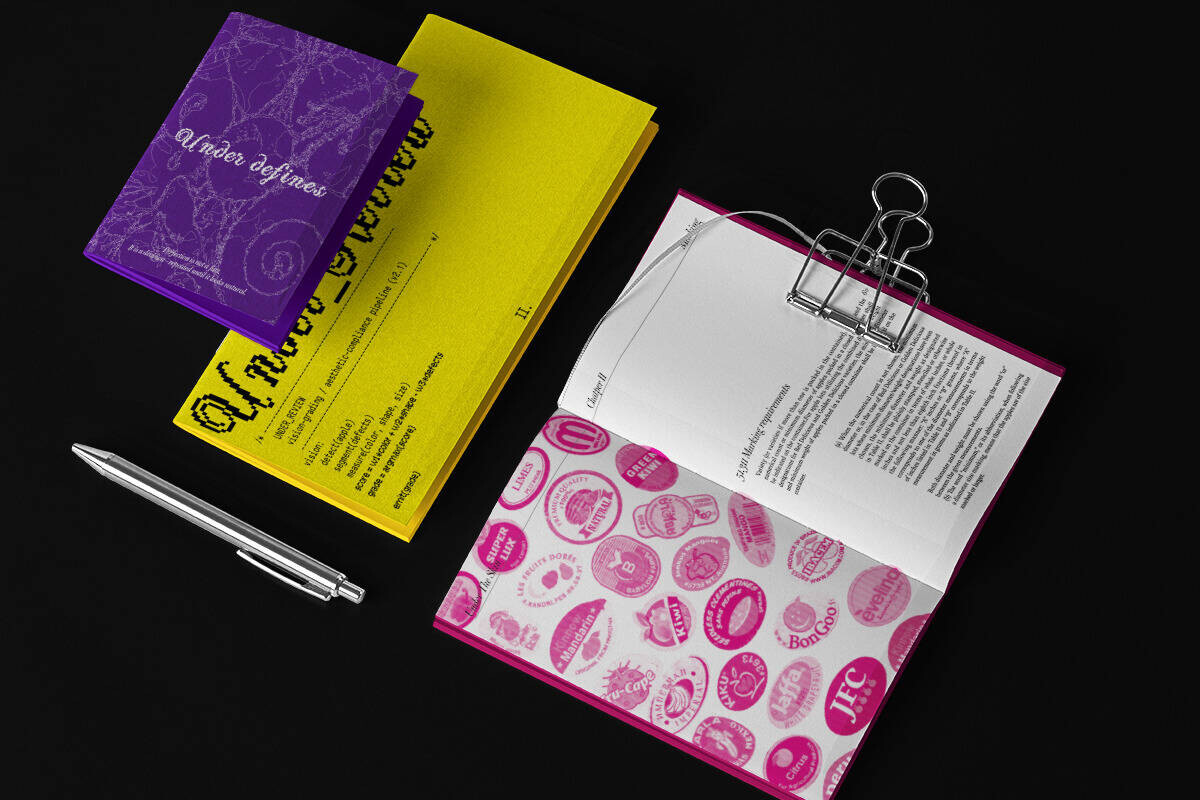
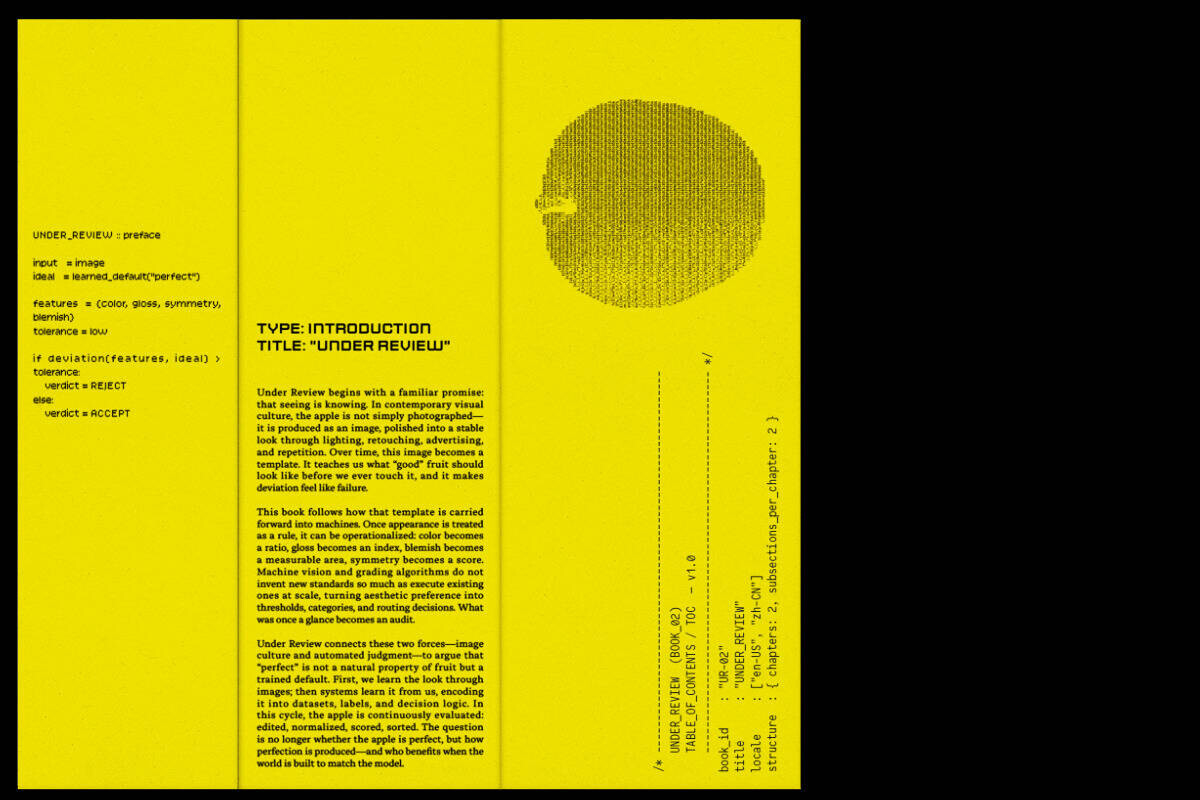
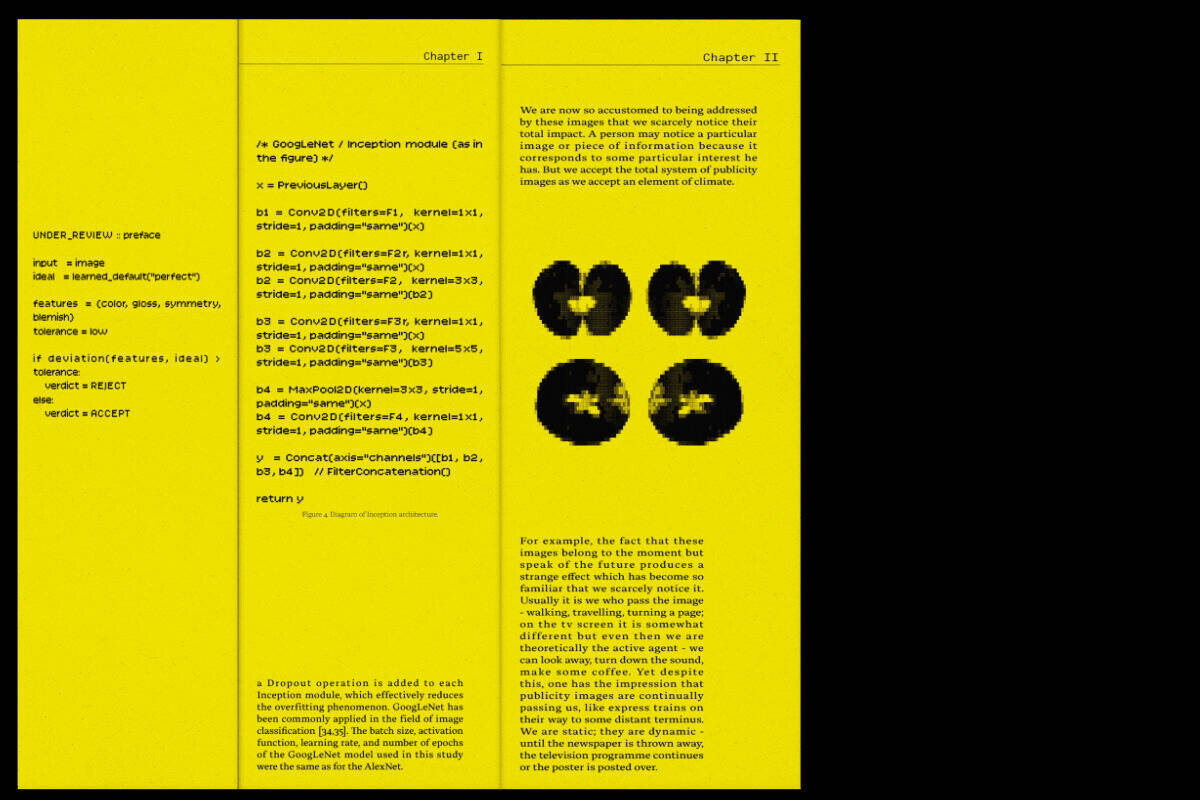
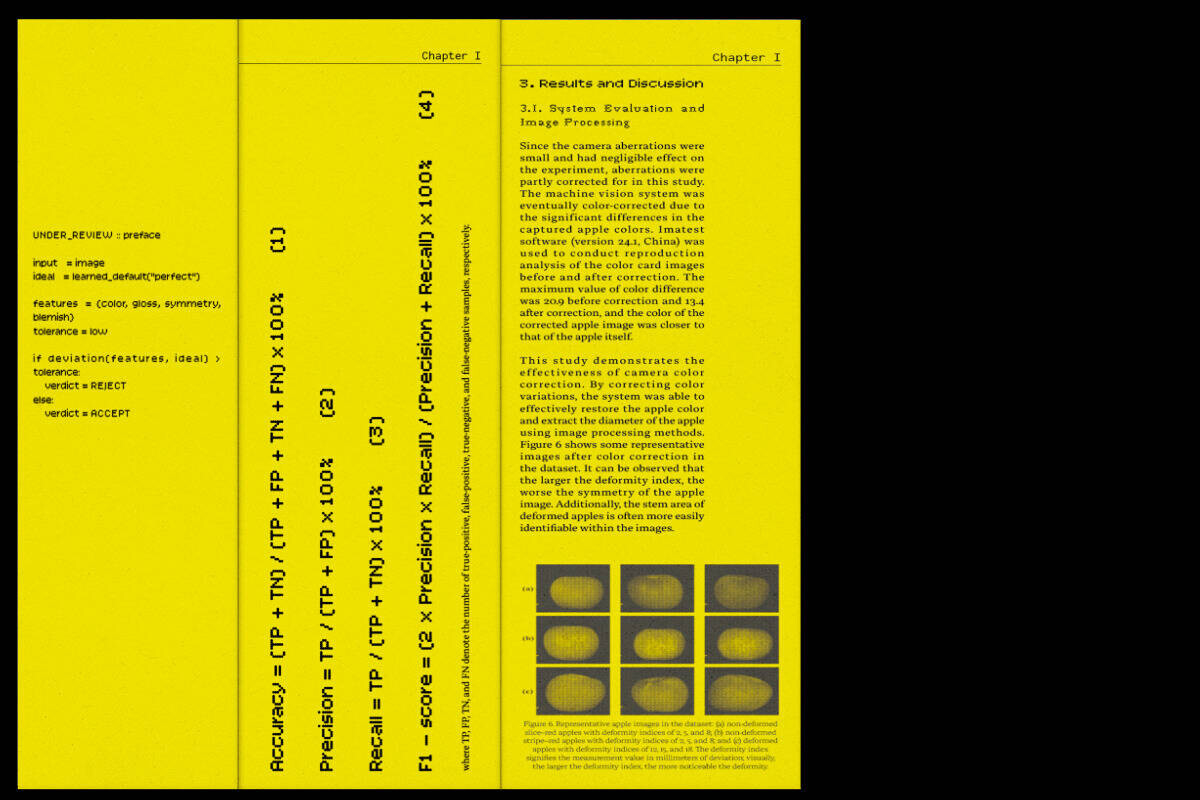
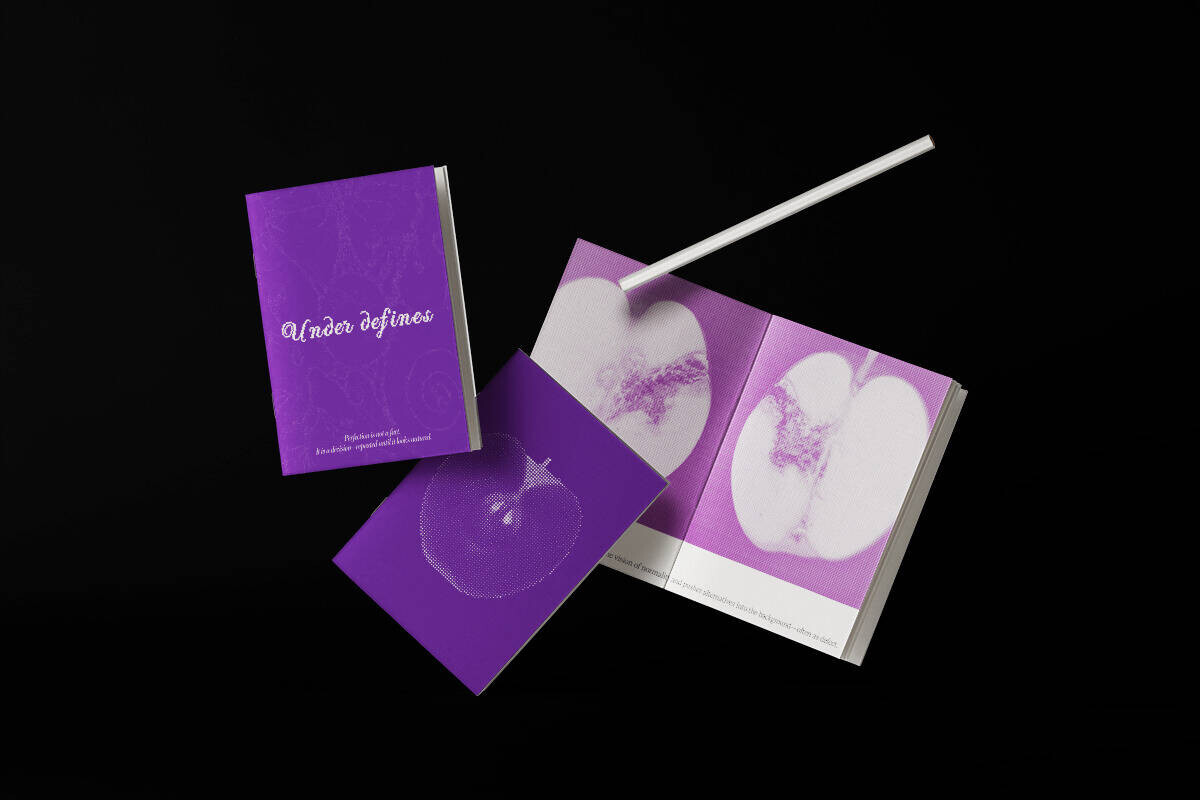
I made Under to take perfection apart. Perfection is often treated as a natural fact—something we can simply recognize—but in practice it is produced, maintained, and repeatedly enforced. I chose the apple because it is both ordinary and revealing. It is ordinary enough that we judge it without thinking: at the supermarket shelf, value is decided in seconds, mostly by appearance. Yet the apple is also one of the clearest examples of standardization. It has been domesticated and improved over time; preferred traits are stabilized and replicated; color, shape, and surface “cleanliness” become measurable requirements; tolerances define what counts as acceptable; deviations are renamed as defects.
For me, the apple functions like a mirror. It turns an abstract question—who defines perfection?—into a visible mechanism. It shows how biology and logistics shape what we call “normal,” how grading and sorting translate difference into outcomes, and how visual culture trains our expectations before we ever touch the fruit. In the contemporary moment, this training extends into machine vision and AI systems: models learn from curated images and labels, then return the same template as an automated judgment.
Through these books, I want to make the standard visible. What sits under the surface of a “perfect” apple is not purity, but a chain of decisions. And each time we choose with our eyes, we participate in that chain.