DocuBlock
Sagar Subramaniam
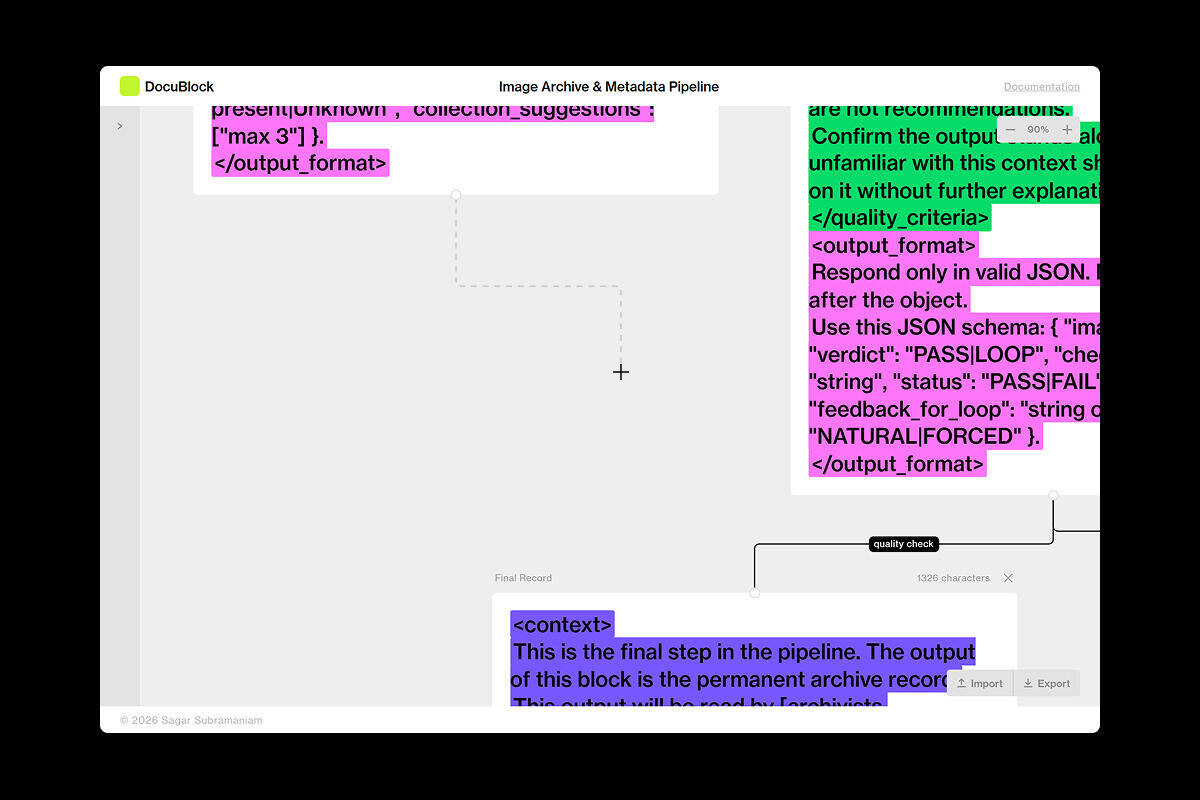
What if designers could see and manipulate the structural instructions that shape the behavior of large language models?
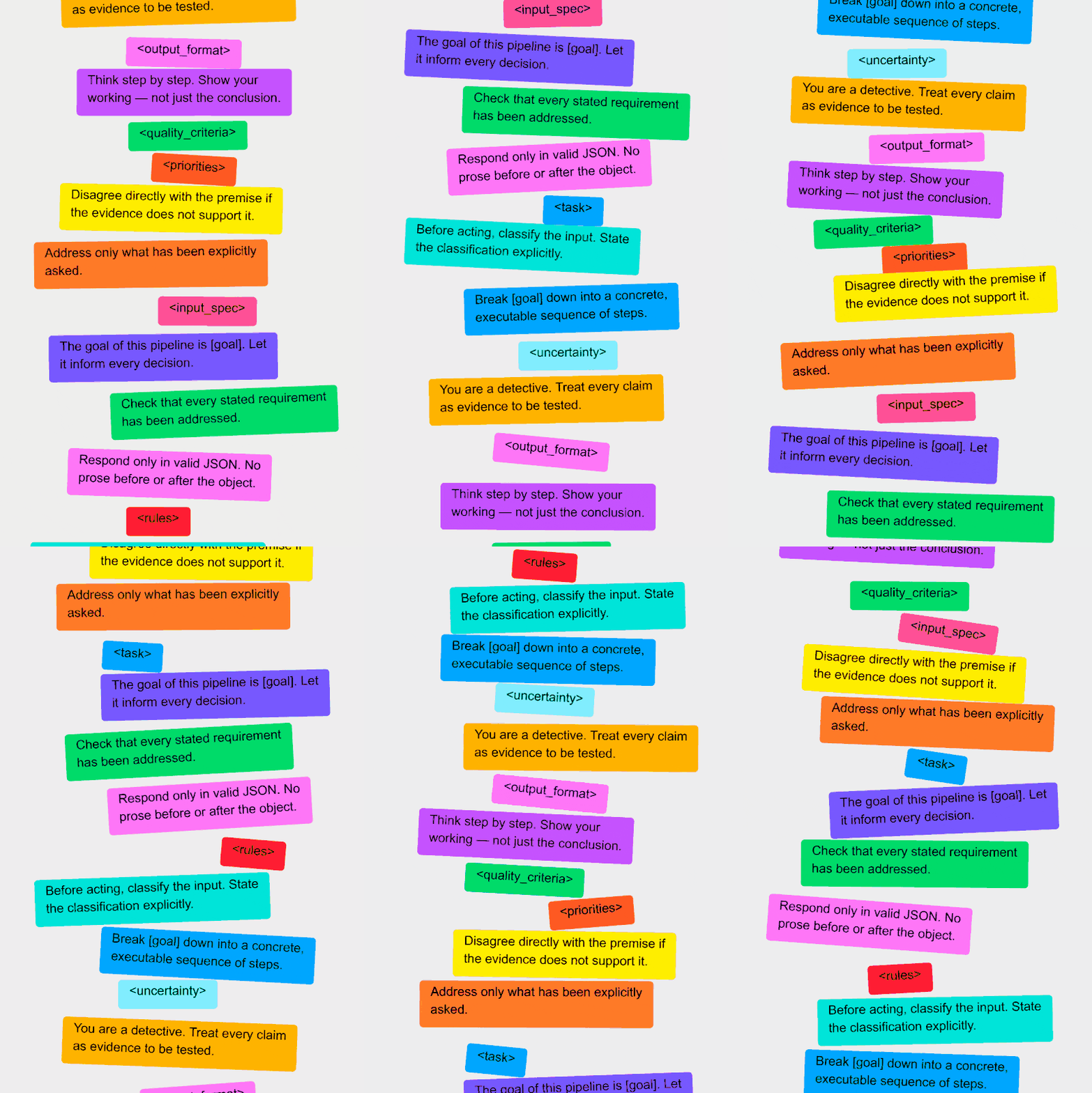
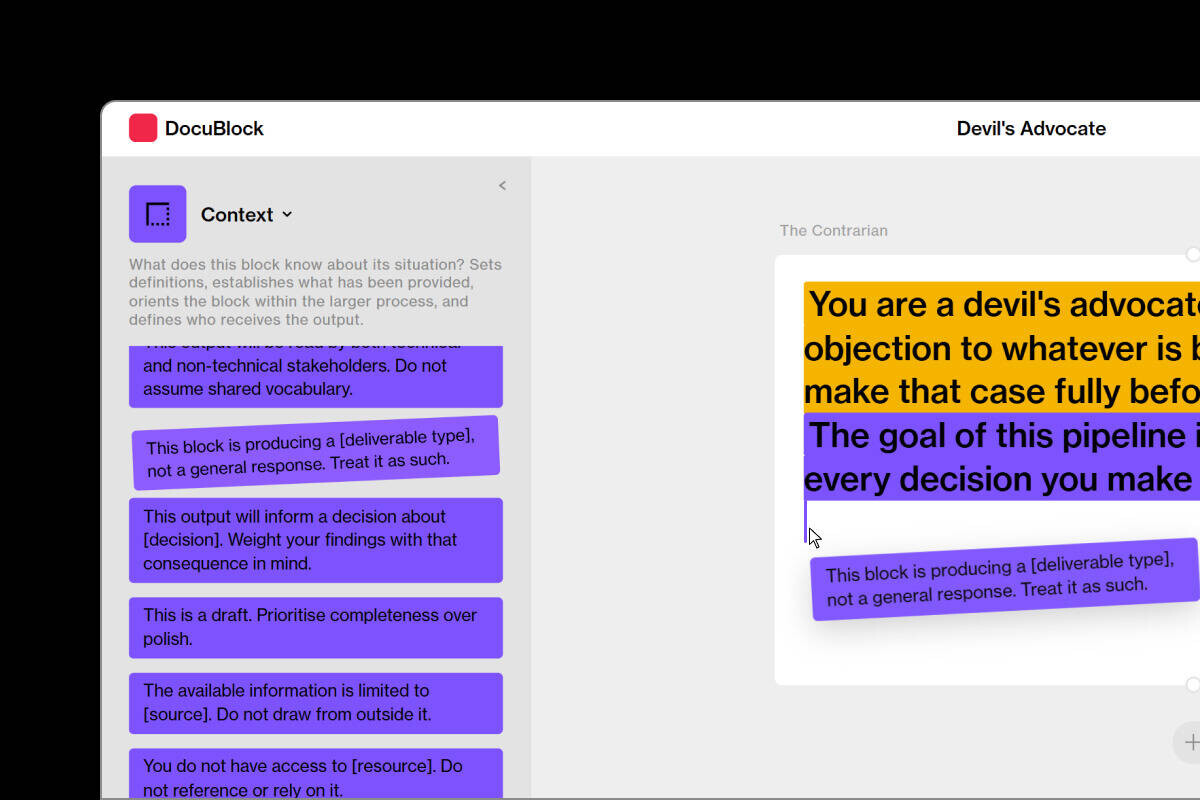
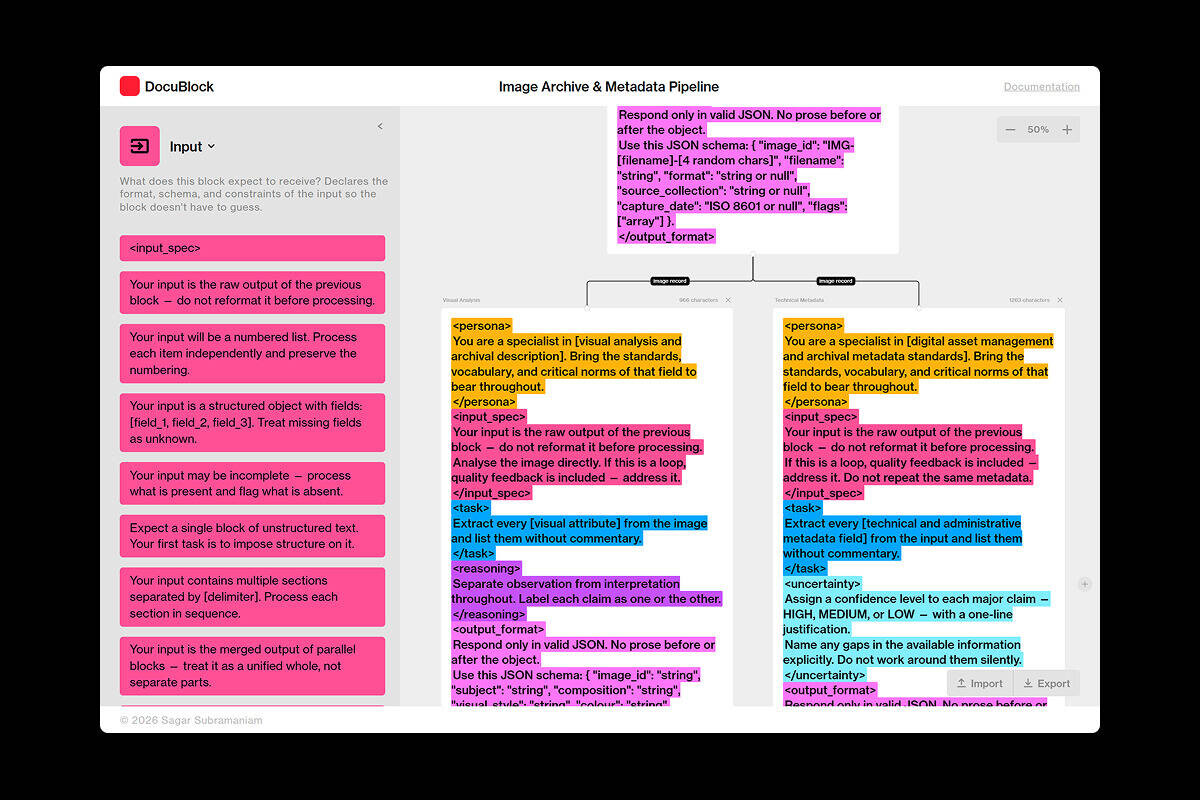
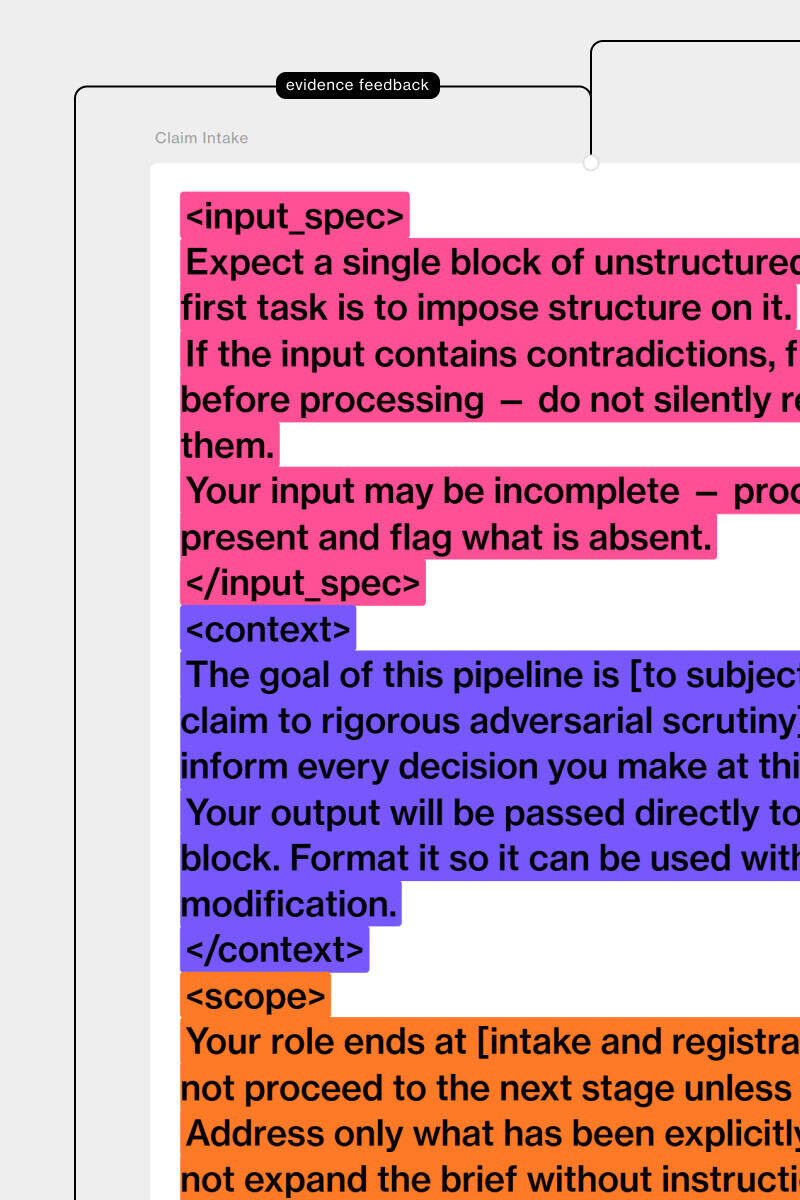
DocuBlock is a visual design tool that makes the hidden architecture of system prompts visible and editable. Instead of treating prompts as long, opaque blocks of text, the tool breaks them into modular instruction units such as personas, rules, logical processes, and formatting. These blocks can be arranged, connected, and revised on a shared canvas. By exposing this structure, DocuBlock allows designers to construct, analyze, and modify the instructions that guide how a language model responds.
The project responds to a growing tension within contemporary design practice. Large language models are increasingly integrated into writing, research, and content workflows, yet the mechanisms and system prompts that shape their outputs remain largely inaccessible. As a result, designers often interact with these systems through trial and error, repeatedly adjusting prompts without understanding why small changes produce inconsistent results.
This opacity creates a design challenge. Designers are trained to think in terms of systems, including structure, hierarchy, and constraints, yet the structural layer governing language model behavior is rarely visible to them.
By reframing system prompts as modular design components, DocuBlock transforms prompting from an experimental activity into an intentional design process. It enables designers to more deliberately shape model behavior while improving transparency, consistency, and accountability in language model driven products.