Terminal
Kyle Hao
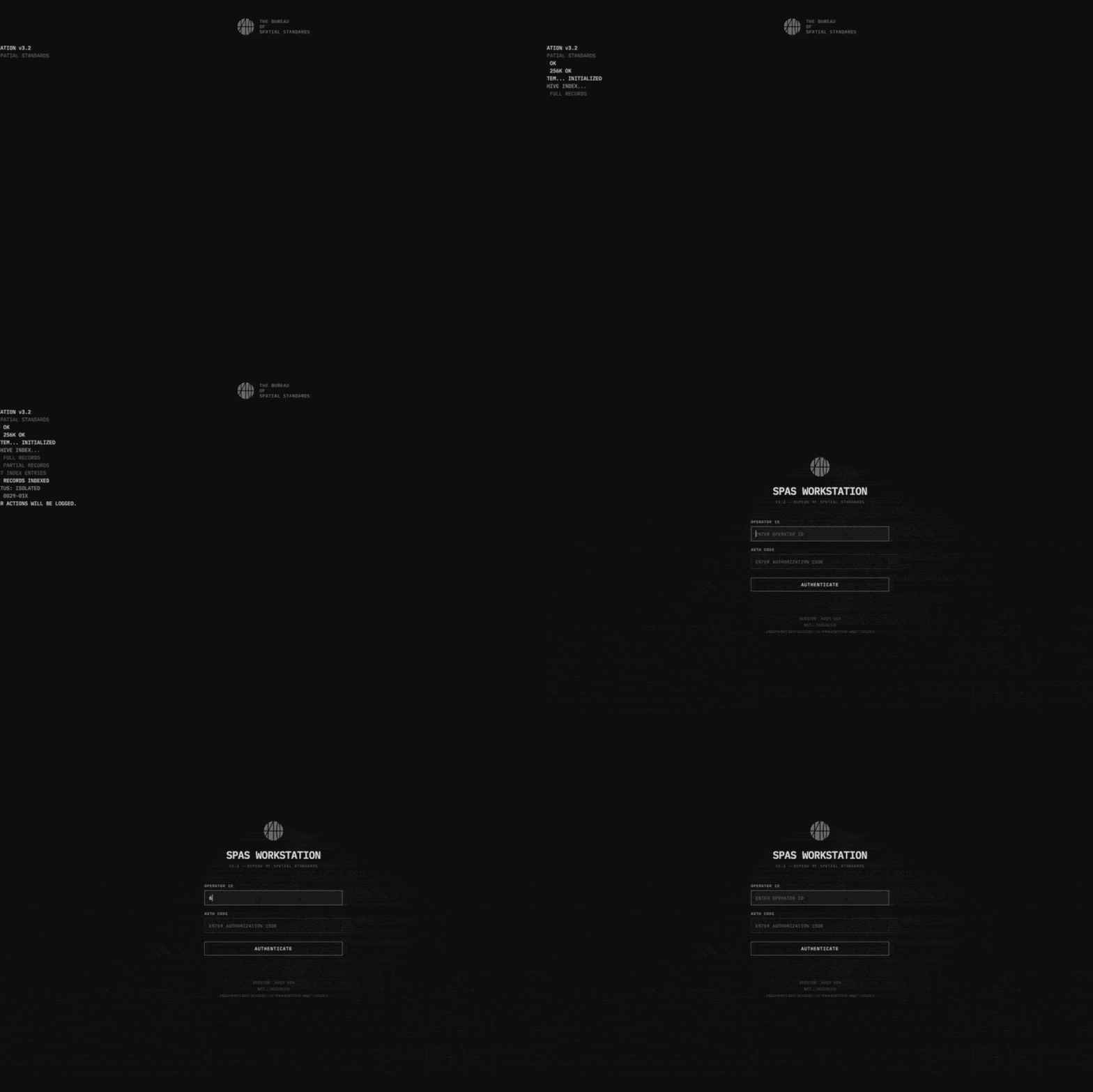
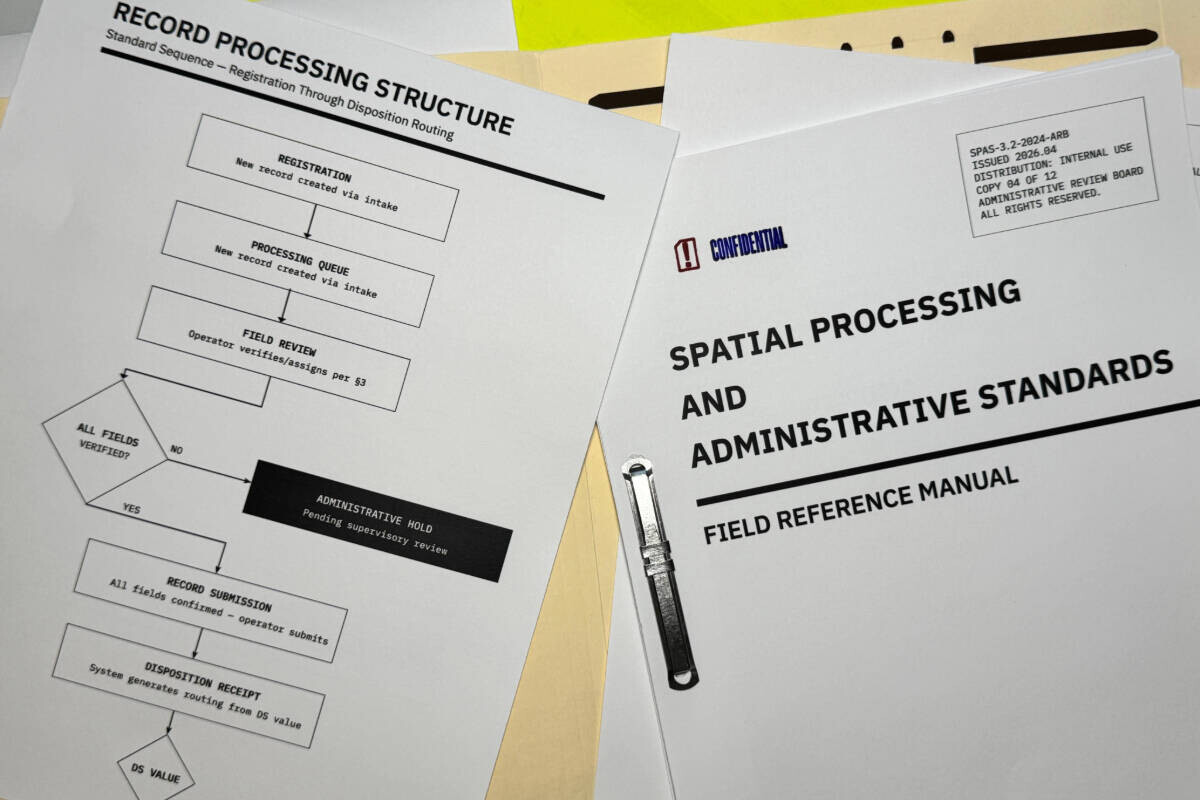
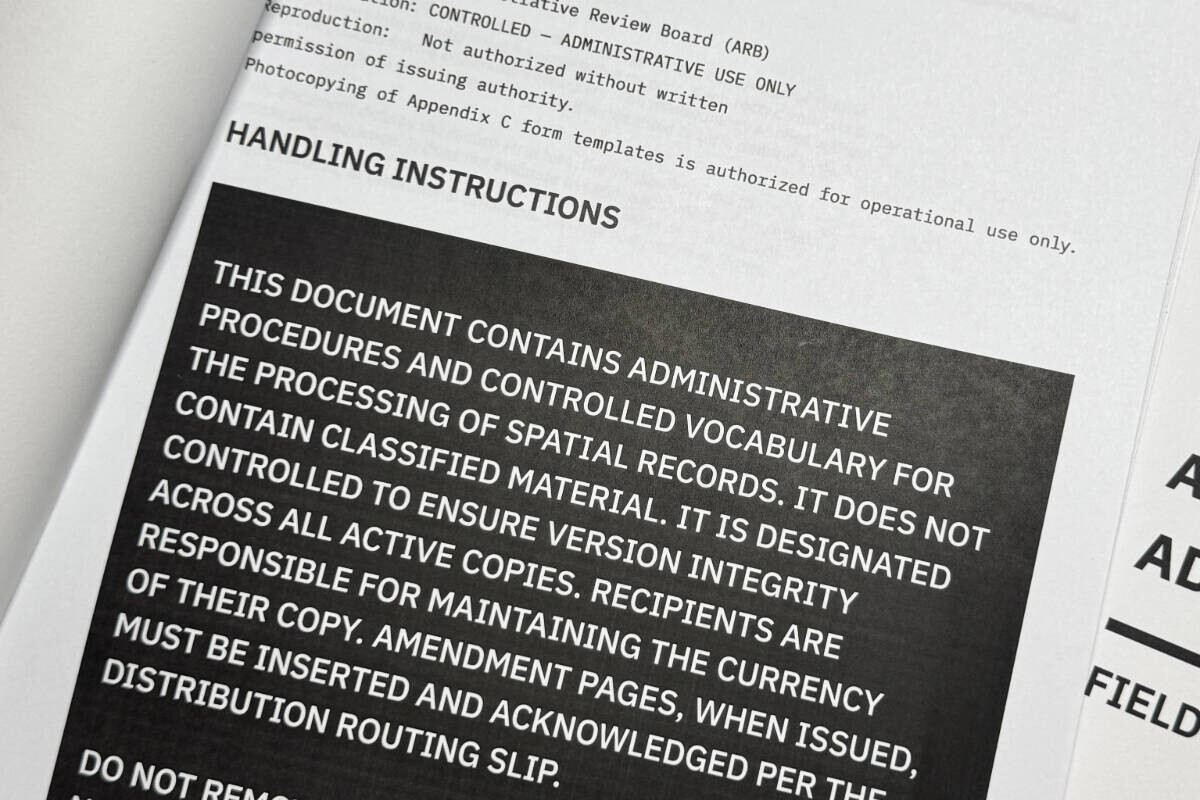
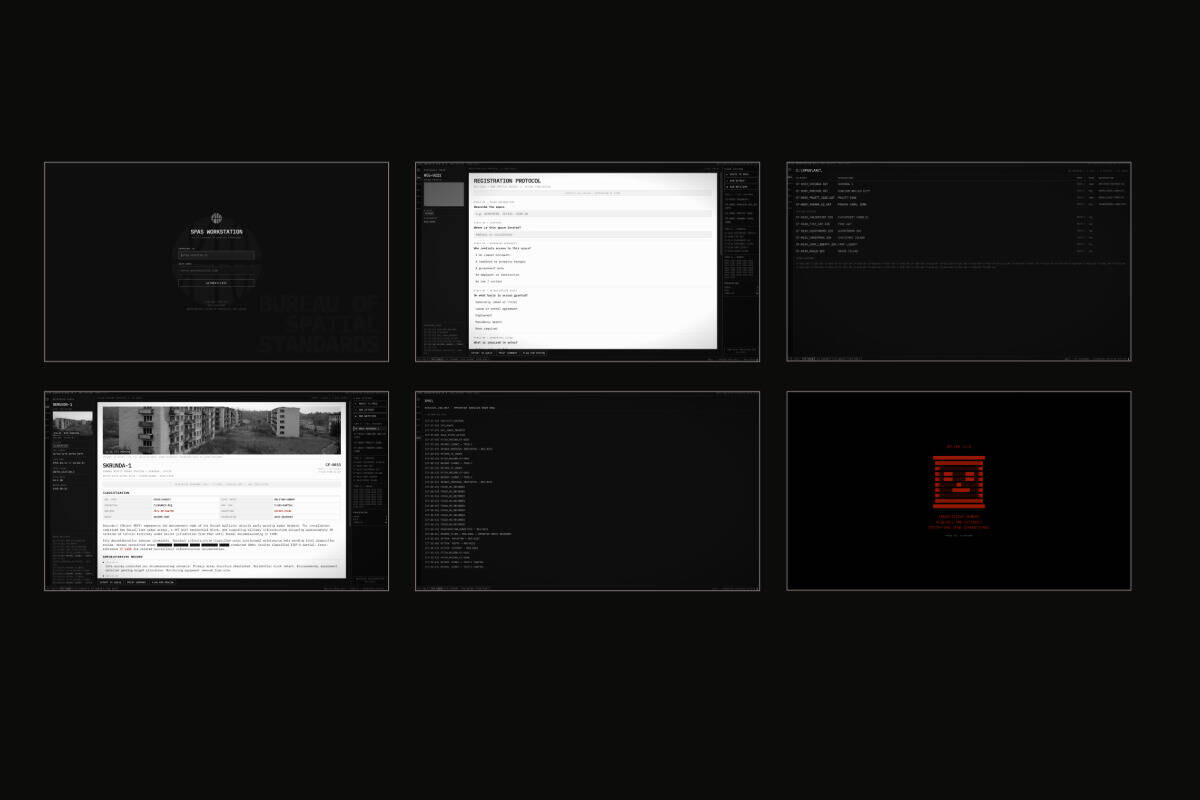
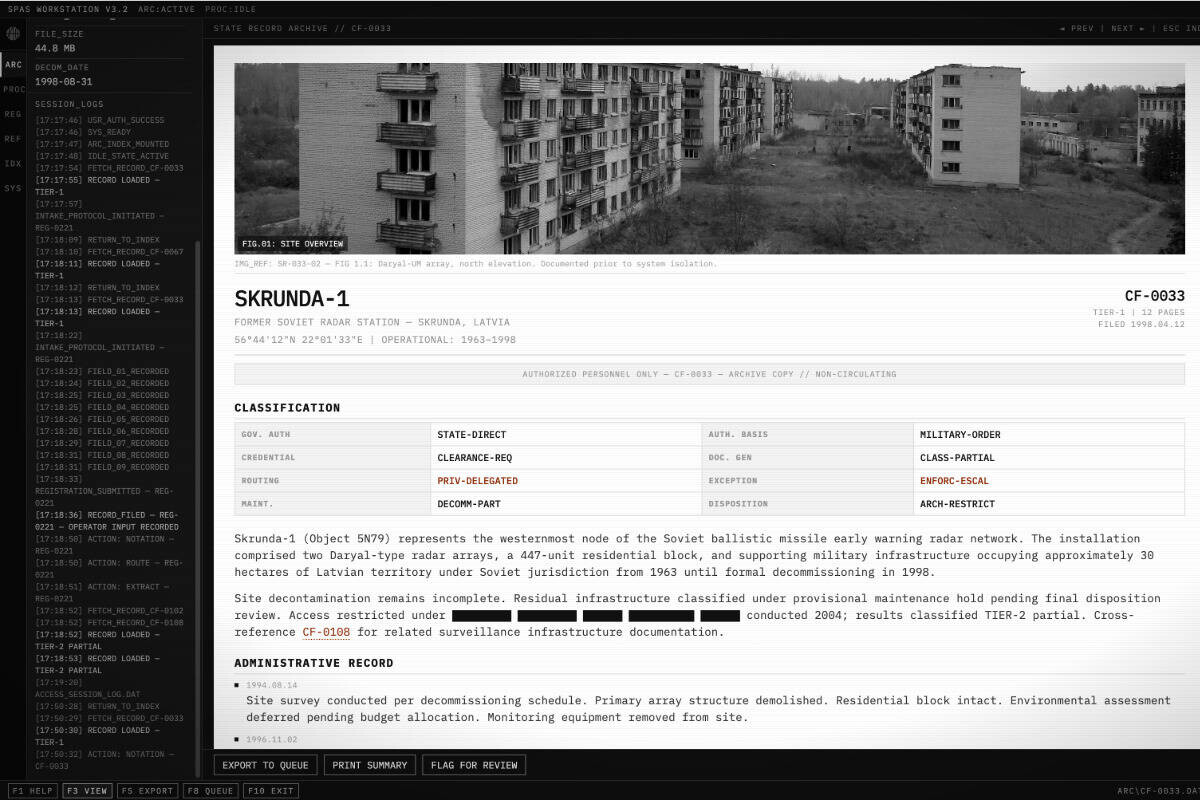
Terminal is a two-part classification system comprising a workstation interface and a printed administrative manual. Together they form the operating environment of the Bureau of Spatial Standards (BSS), a fictional government agency that processes spatial records, categorizing places by their access regimes, credential requirements, visibility conditions, and administrative dispositions.
The archive contains real places: a Soviet radar installation in Latvia, a demolished American housing project, a walled city that once held 33,000 people in seven acres. Each is reduced to the same eight-field record format. Mid-session, the system routes an intake form to the operator. The questions are mundane: who controls access to your space, what documentation exists for it, what happens if you leave. The operator's answers generate a new record, filed alongside everything else.
The workstation runs as a browser-based application modeled on Norton Commander-era file managers. The manual is a three-hole-punched binder document containing the authentication code required to log in, the controlled vocabulary for all classification fields, and the procedural protocols governing record processing. Neither component is complete without the other.
The installation places the visitor at a desk with a contemporary monitor, keyboard, mouse, and the manual. There is no explanatory wall text. The work is the work you do inside it.