Coexistent Language
Raina Redcross
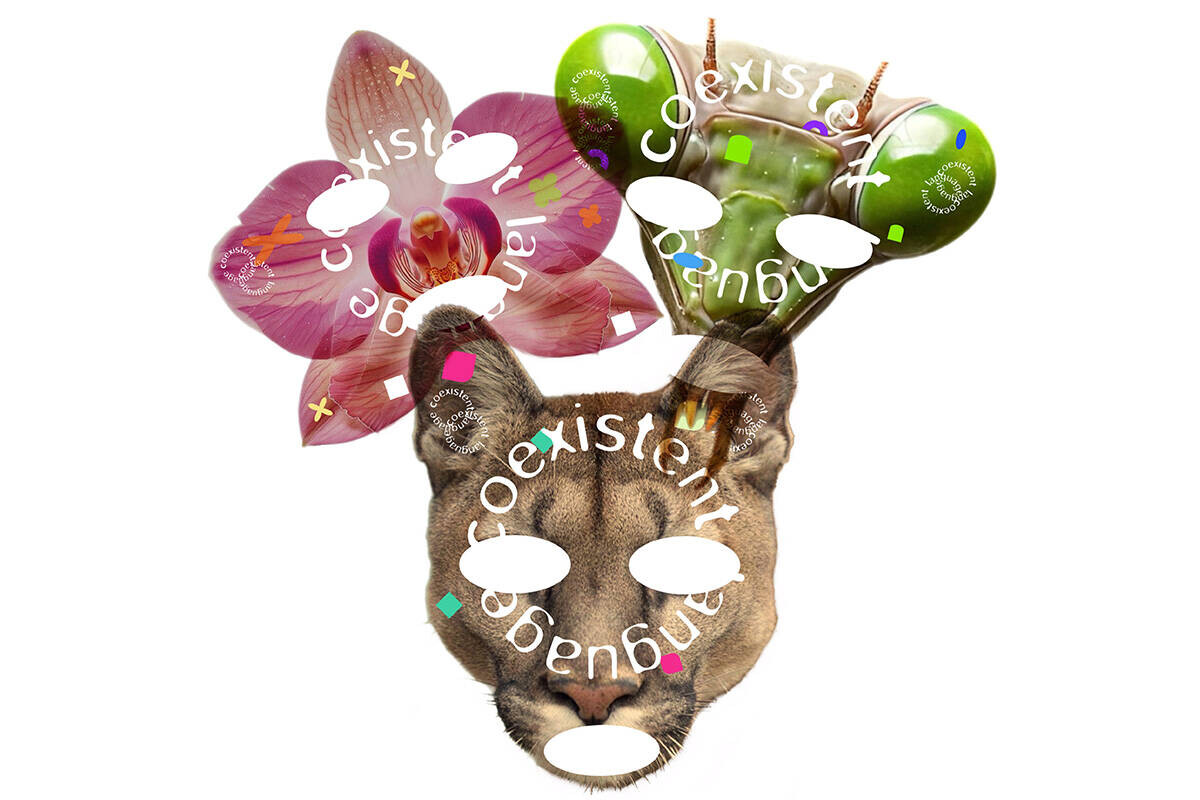
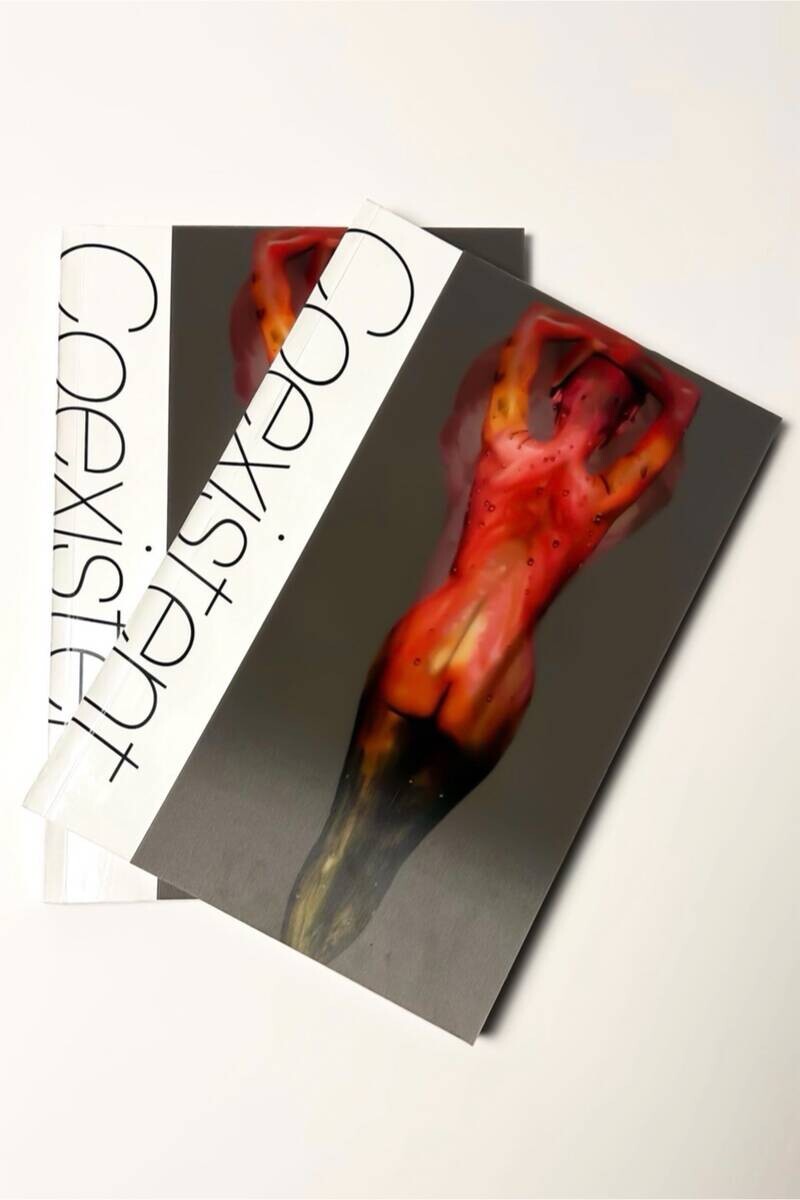
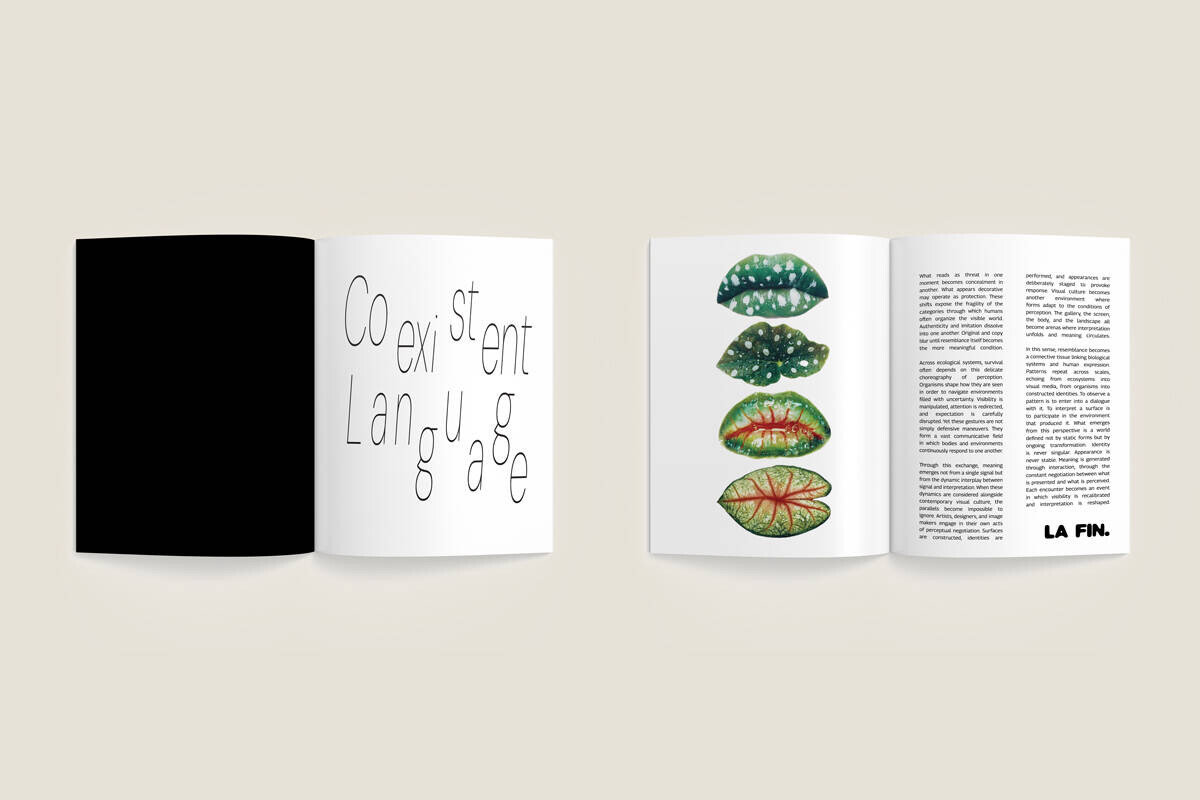
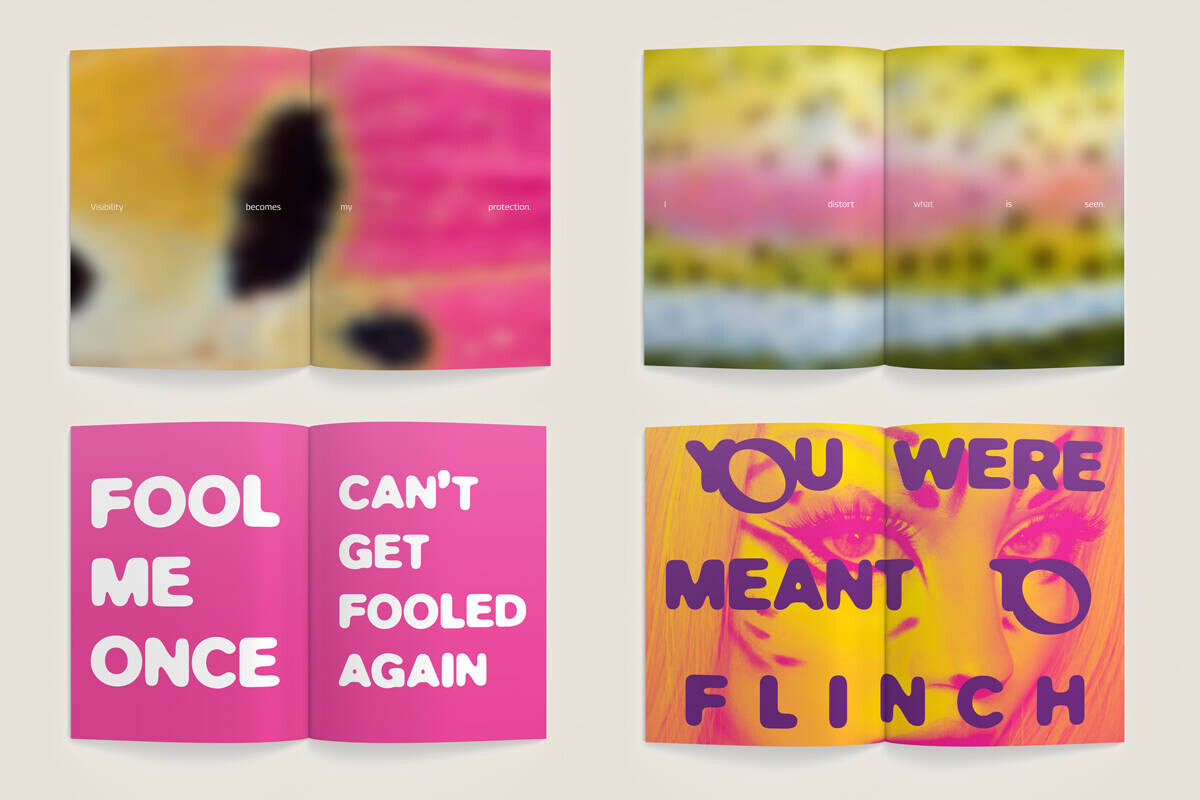
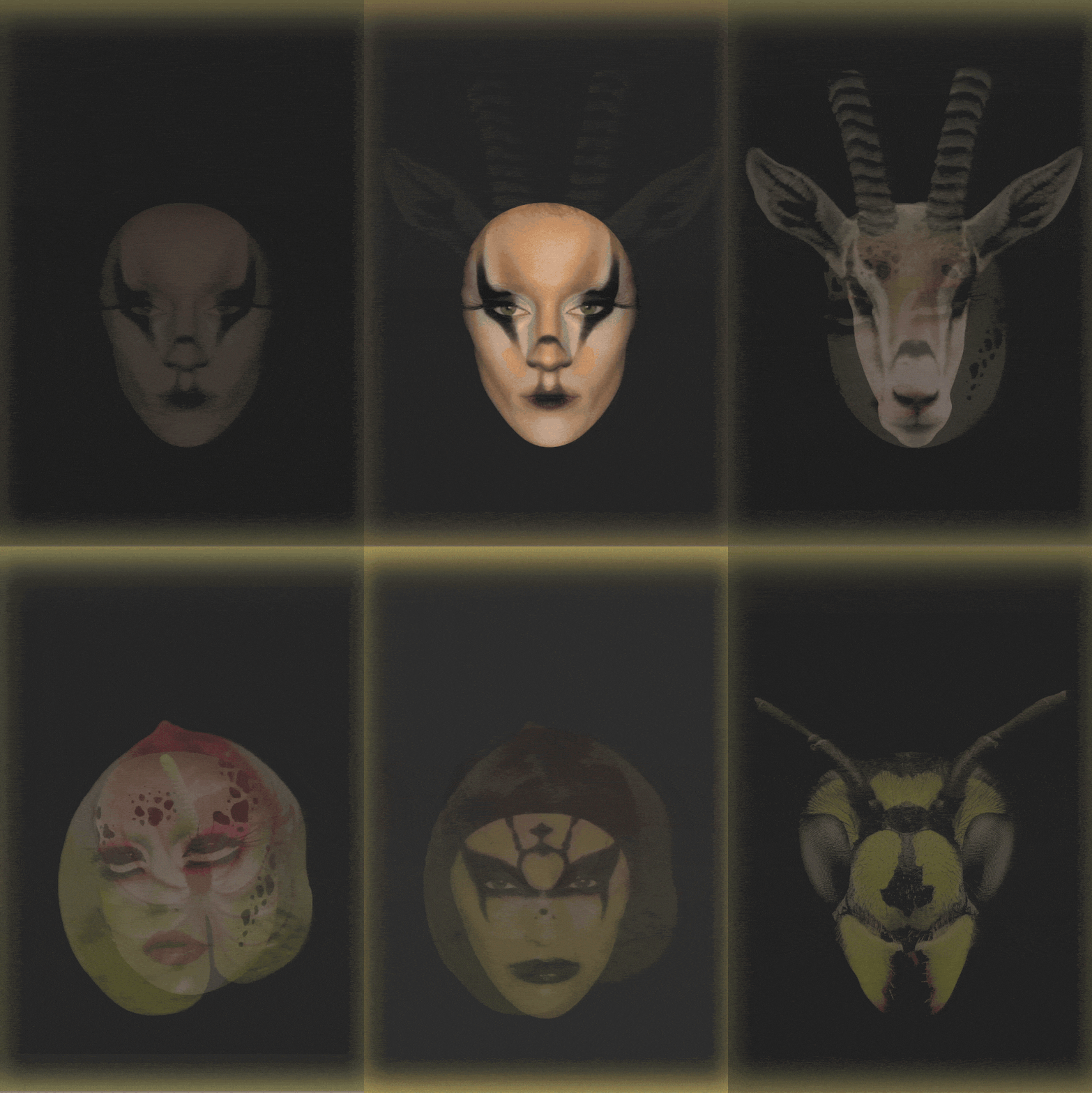
Mimicry operates as a visual language shared by biological systems and human visual culture. In nature, mimicry functions as a relational strategy shaped by perception, signaling, and interpretation beyond the constraints of fixed resemblance. Biological frameworks inform contemporary design practice, as images, typography, motion, and the body itself exhibit mimetic behaviors. This work examines mimicry as a form of communication rather than approaching nature purely as a source of evolutionary adaptation or efficiency.
Visual forms shift, distort, conceal, and exaggerate in response to the viewer, emphasizing perception as an active process. Through editorial design, motion graphics, and wearable forms, this project investigates how visual systems exhibit mimicry via instability, illusion, and transformation. These components operate together as a single system, moving from page to screen to body, with each medium reframing how meaning is encountered and produced.
Visual mimicry creates a shared sensory language. By positioning design as a perceptual practice, this work proposes that visual communication can move beyond representation toward systems that act, respond, and relate.