The Ripley Corporation: Be Your Best Version™
Seo Yeon Kelly Kim
"It is no longer a question of a false representation of reality (ideology) but of concealing the fact that the real is no longer real, and thus of saving the reality principle."
—Jean Baudrillard, Simulacra and Simulation (1981)
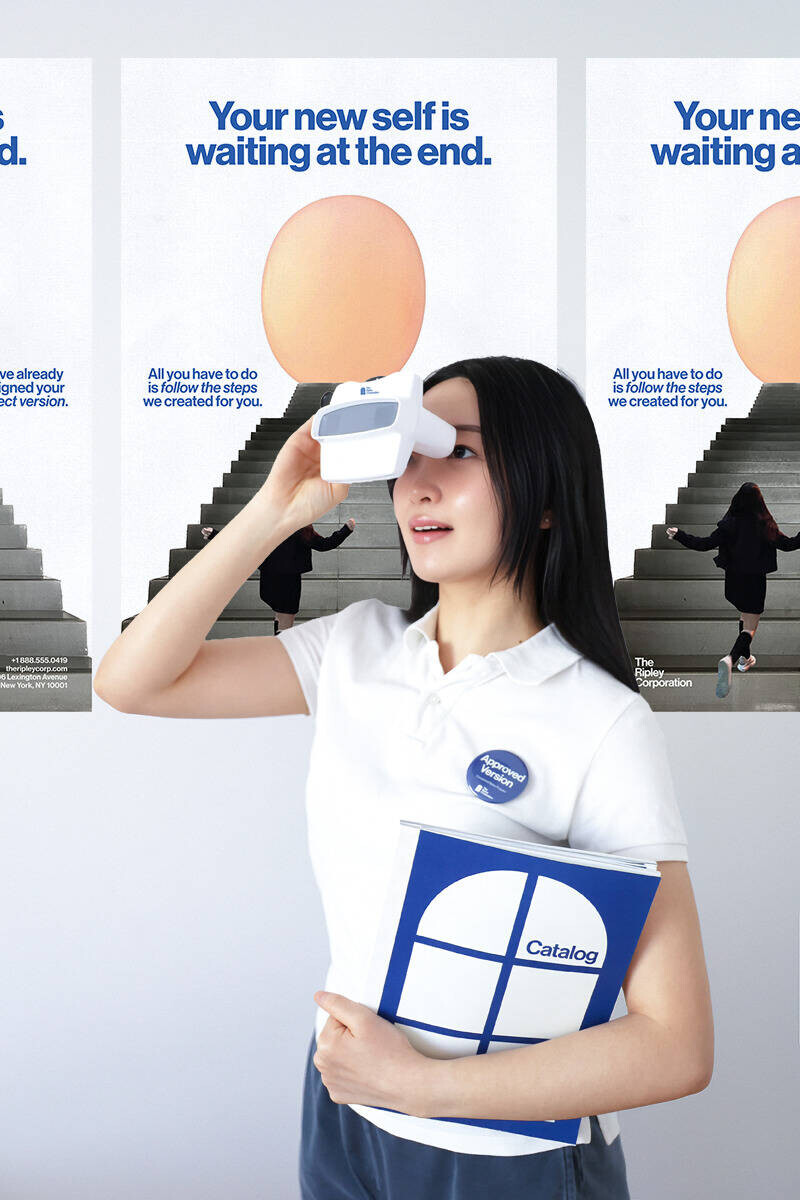
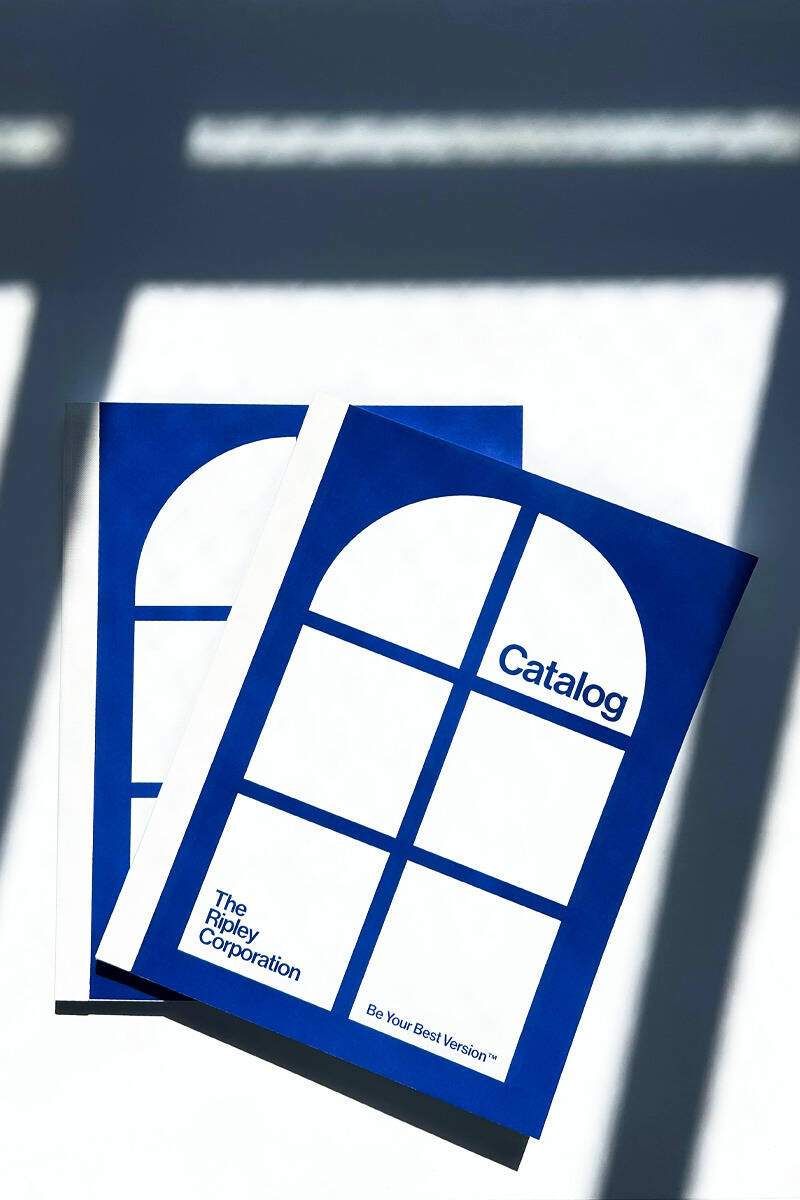
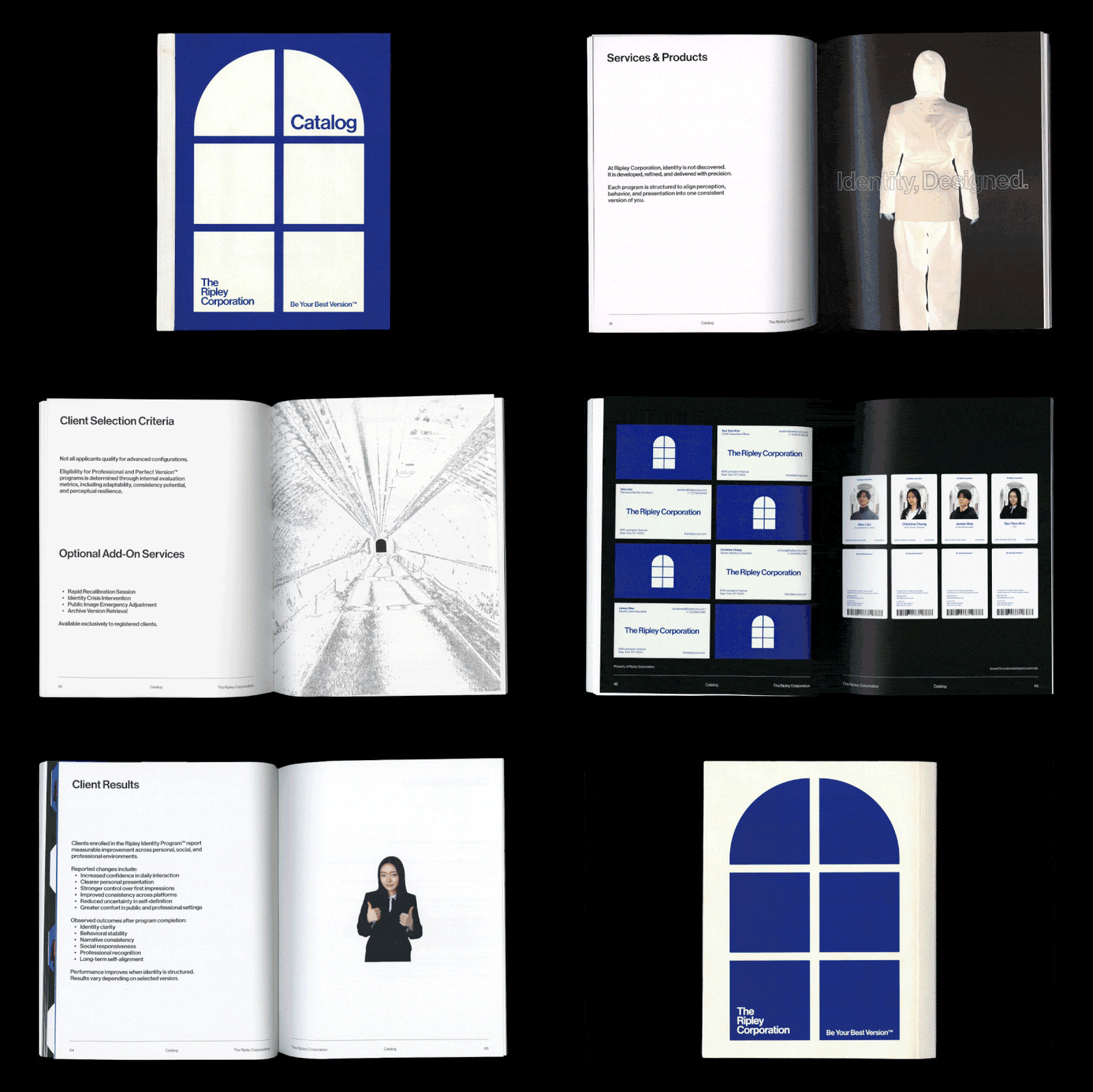
The Ripley Corporation is where anyone can become their best version. The corporation presents identity as something that can be designed, adjusted, and improved through a structured program. Within this system, identity is presented as a window that can be opened, closed, customized, and carefully framed. A window separates the inside from the outside while controlling what is visible between the two.
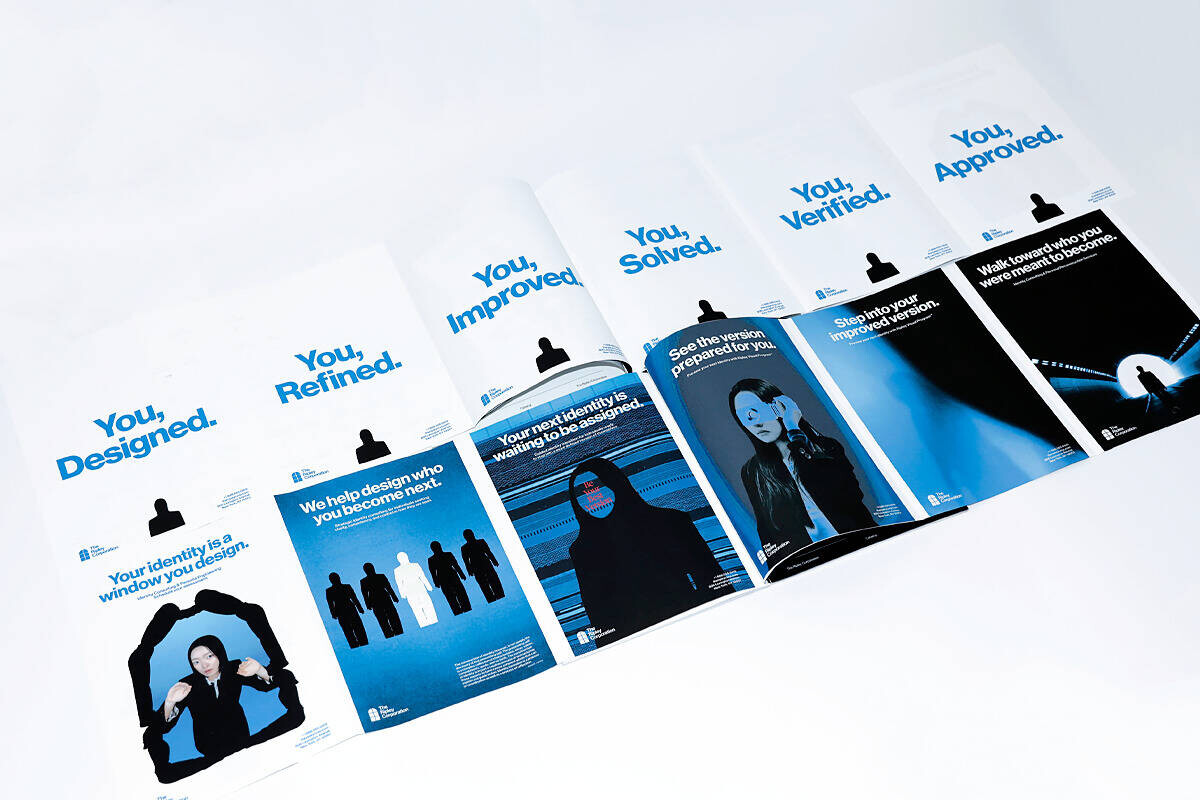
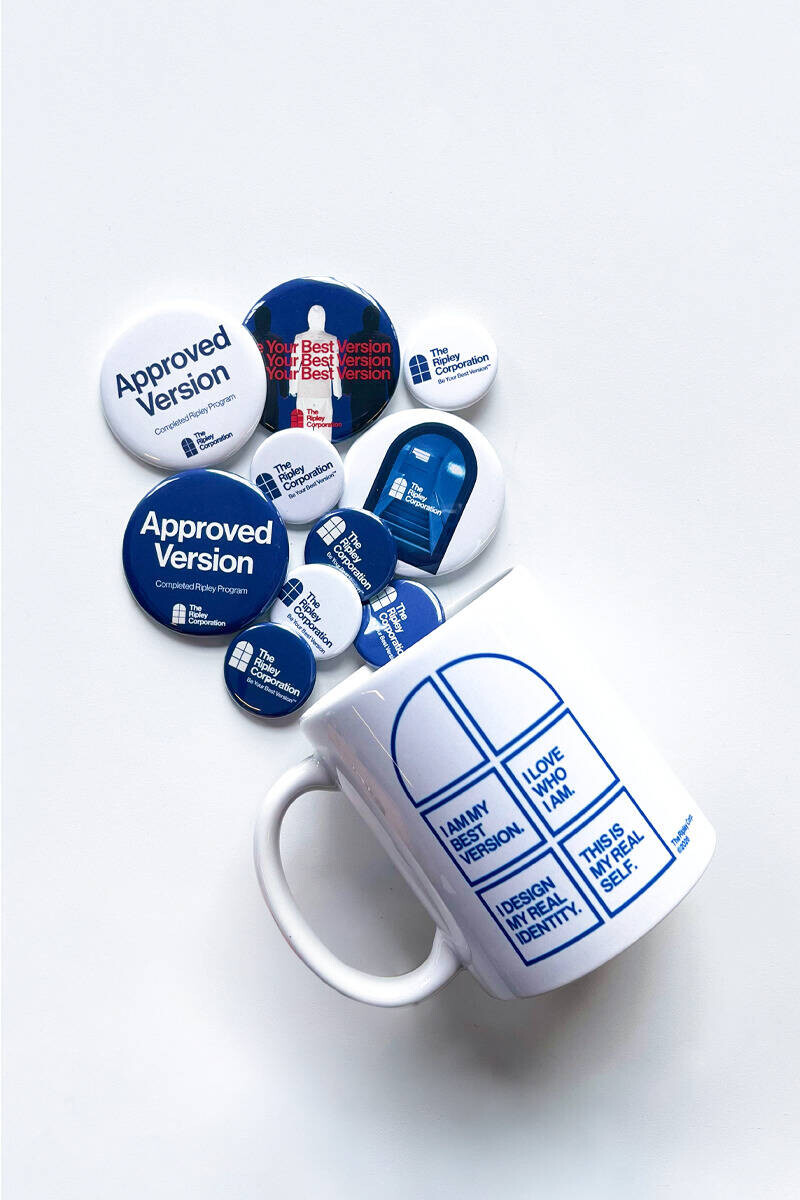
Ripley syndrome is a condition where someone creates a false identity, believes it, and uses it to gain admiration or escape their real self. This thesis responds to a culture where people constantly edit and rebrand themselves to seem more real, more successful, or more likable. But the more they try, the more the self they were improving disappears. This thesis project is a complete fictional corporate identity system: branding, posters, catalog, ephemera, and an experiential View-Master. Every design decision—clean typography, structured layouts, employee swag, and marketing language—was made to make the corporation feel believable, while slowly revealing its artificiality. The Ripley Corporation holds both the humor and the sadness of a culture where authenticity has become a performance, and where the desire to become a better version of yourself never ends.