Brilliant Timing
Bernadine Hand
Our relationship to tools is changing. The push and pull between material limits and creative possibility is being corroded. Friction that once bred understanding is being lost to a press of a button, letting work escape from our fingertips. In clouds of expansive possibility, what weight can intimate understanding of a physical machine hold?
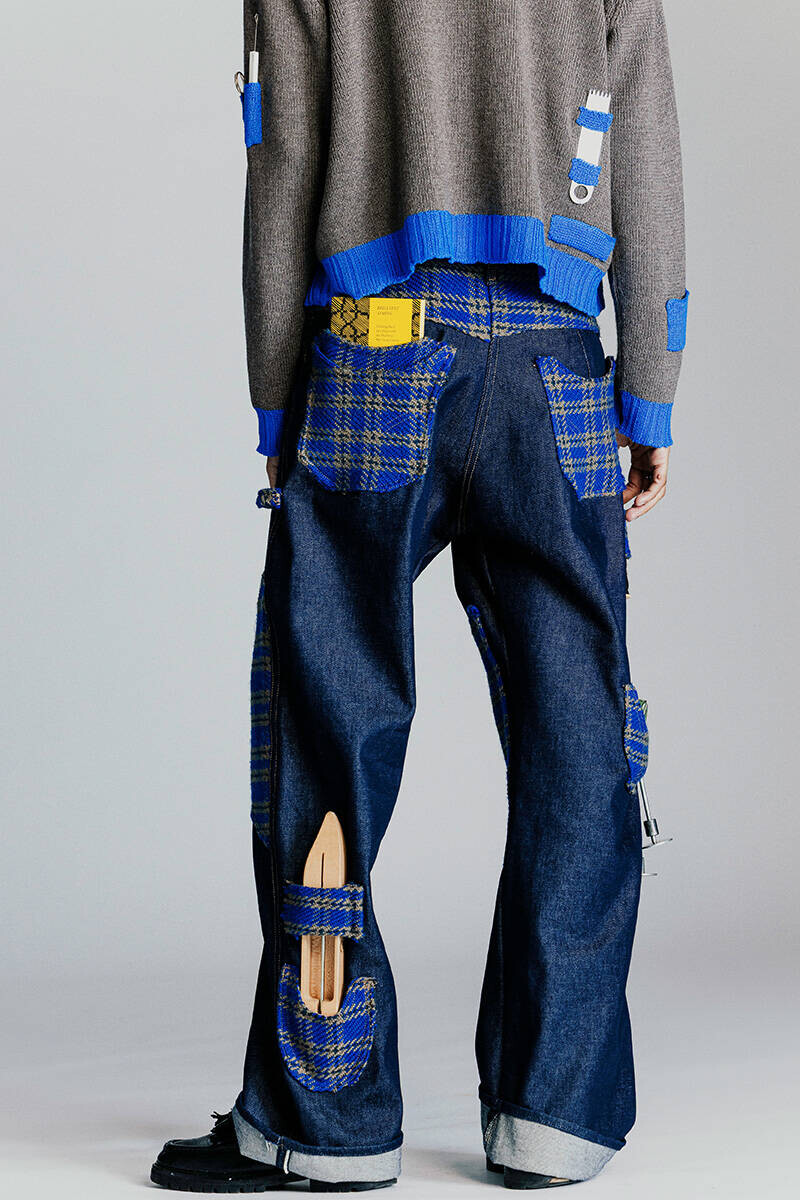
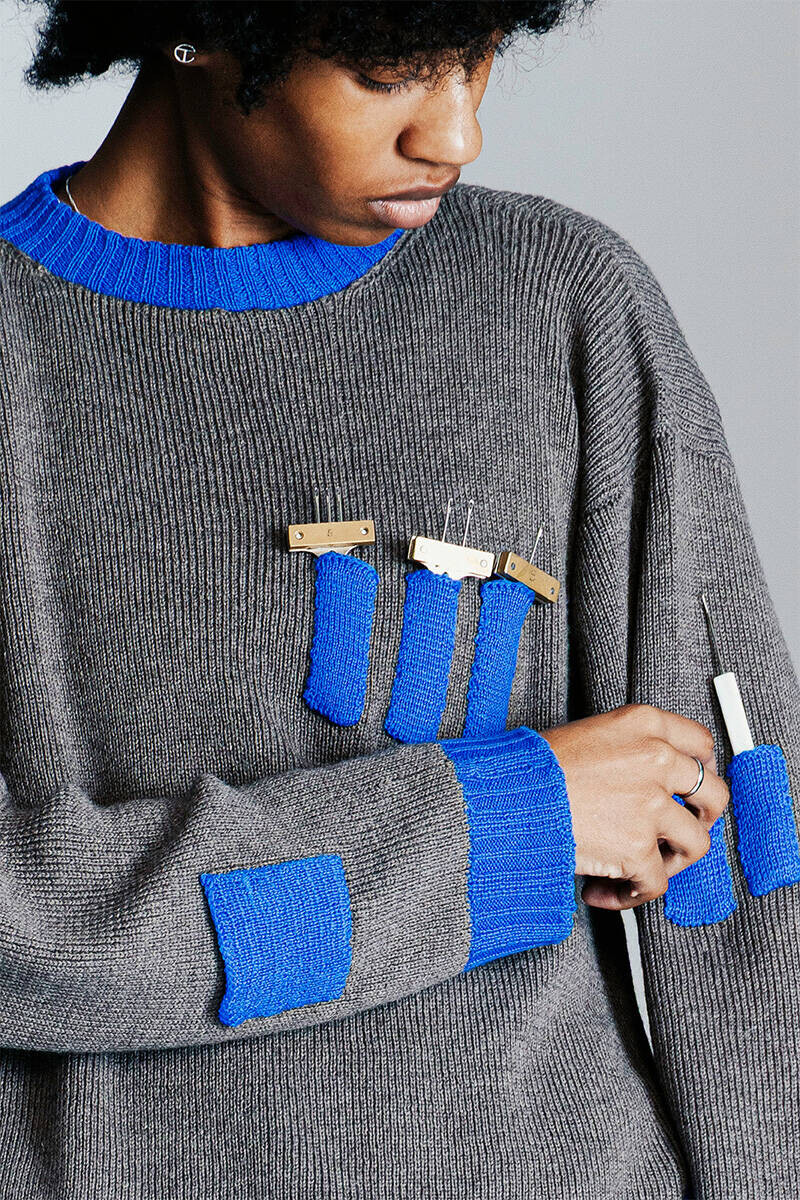
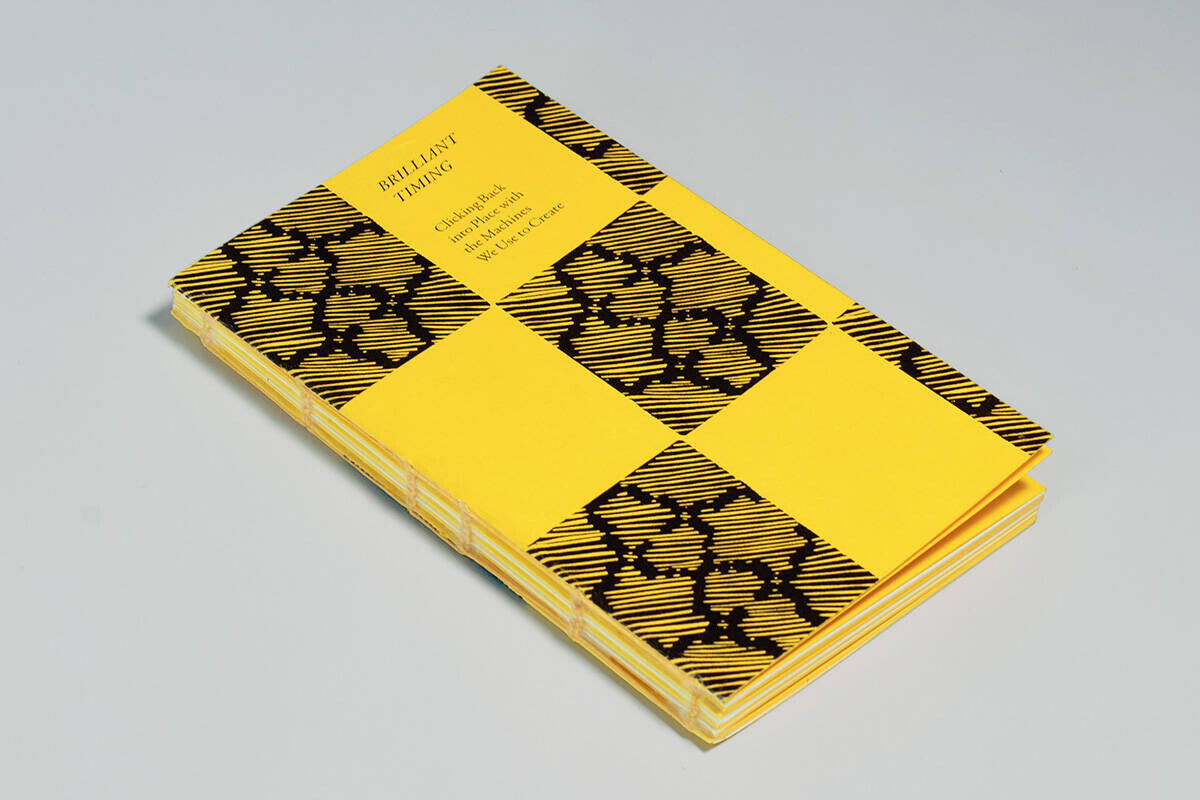
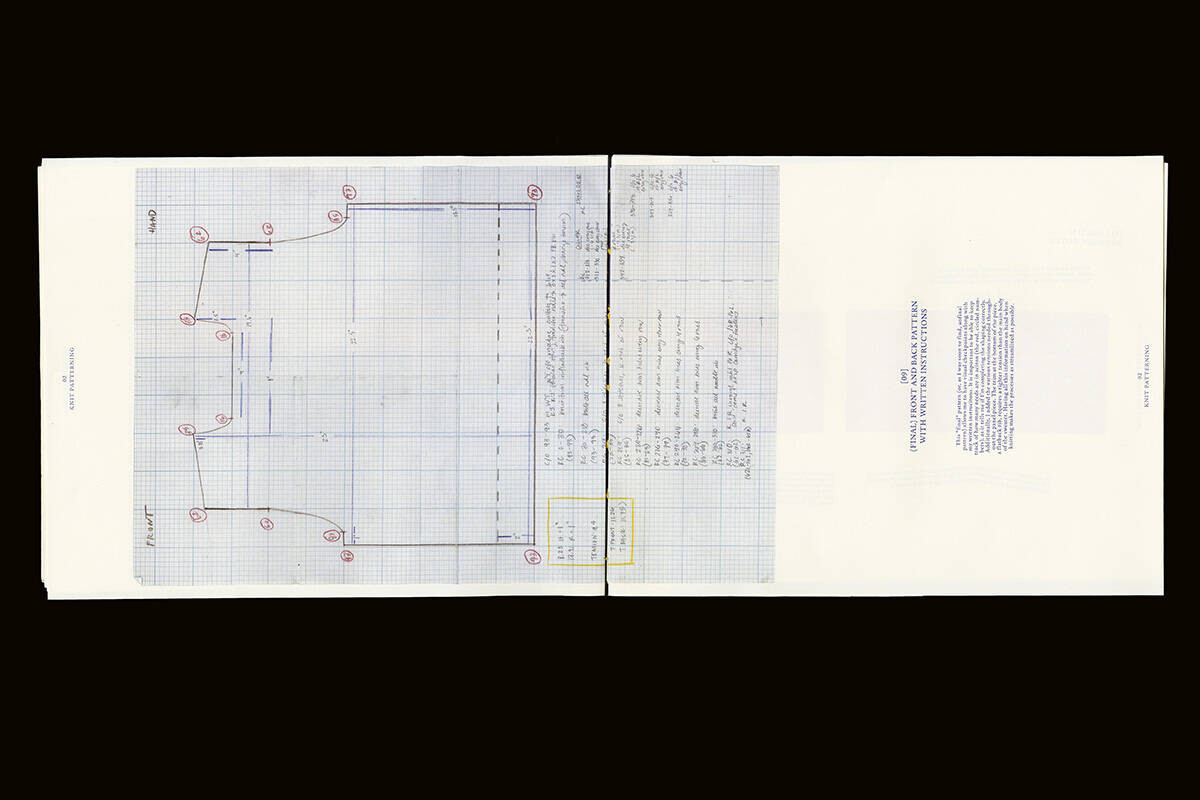
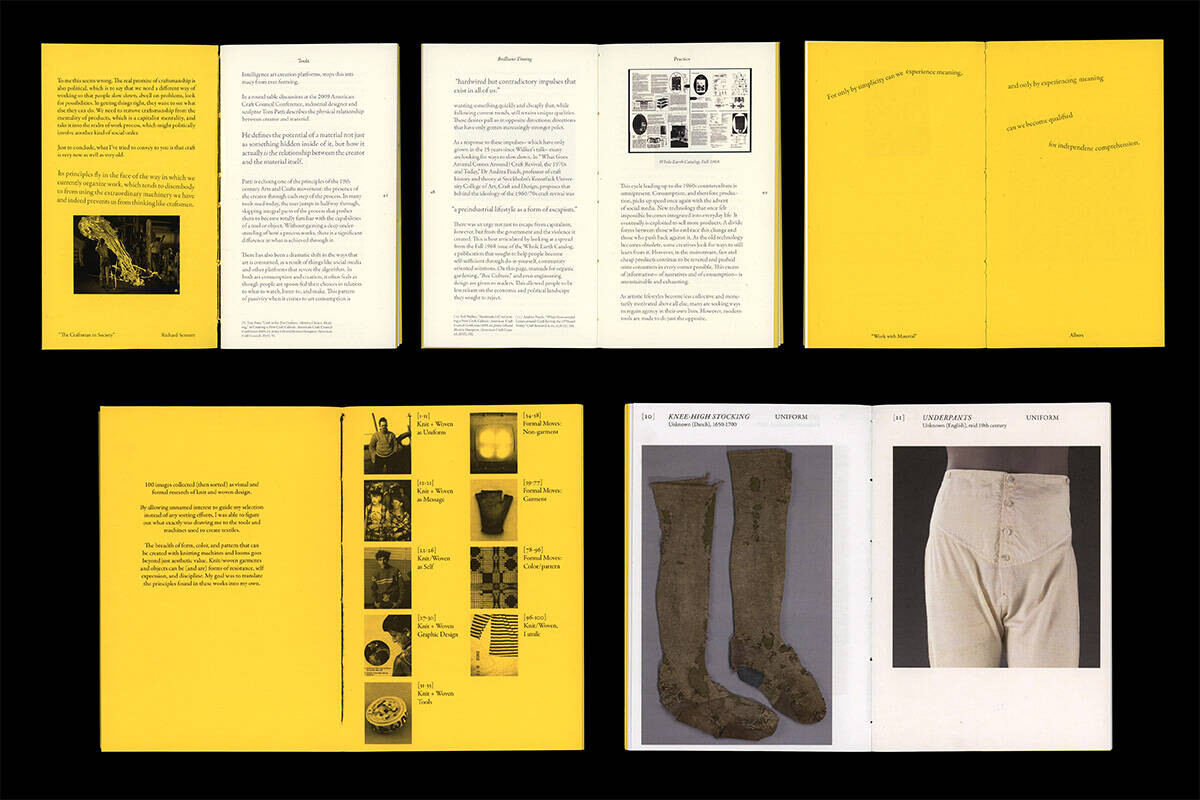
Brilliant Timing is a set of garments made with and for knitting machines and floor looms. A sweater, made on an industrial hand-operated Dubied knitting machine, has pockets for the tools used to manipulate stitches while knitting. A pair of jeans have hand woven wool twill pockets for weaving shuttles and bobbins, as well as heavier knitting tools. Three accompanying books discuss the relationship between designer and machine, dissecting craft-based processes and their historic roles in resistance movements.
In a time where choice and active engagement in process is marketed as a burden, pushing oneself to deliberately investigate ways of making is an act of resistance. It is in the careful negotiation between materials and ideas where we experience meaning.
This intentional relationship to machines, however, is a slow, quiet one. And in an increasingly loud world, it’s unclear where that fits in.