Tadka Table
Divyani Singh
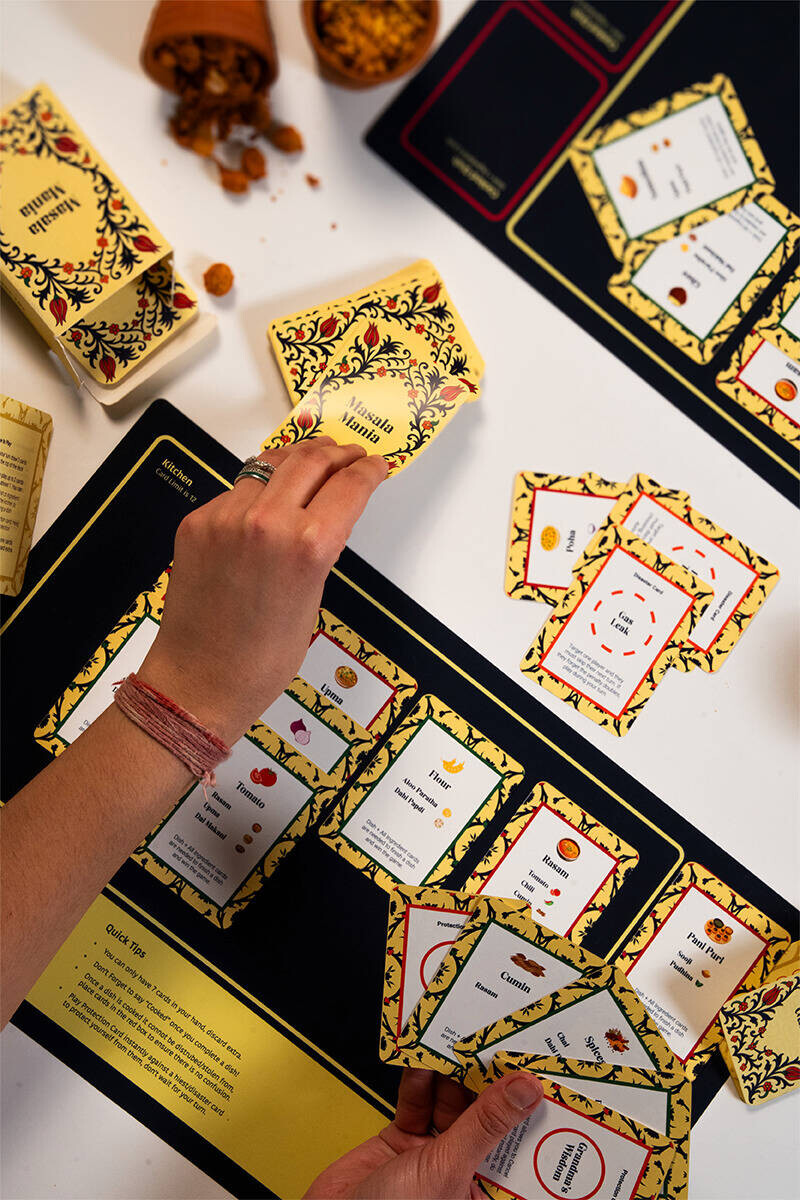
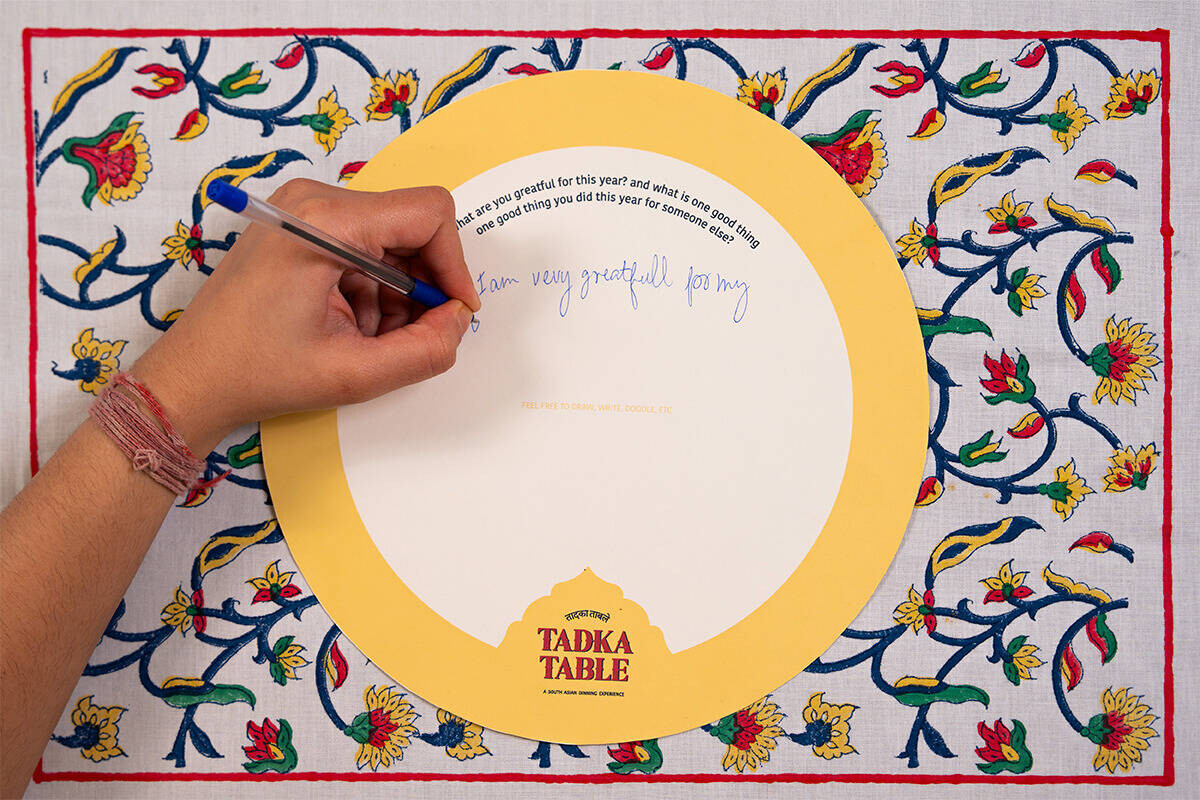
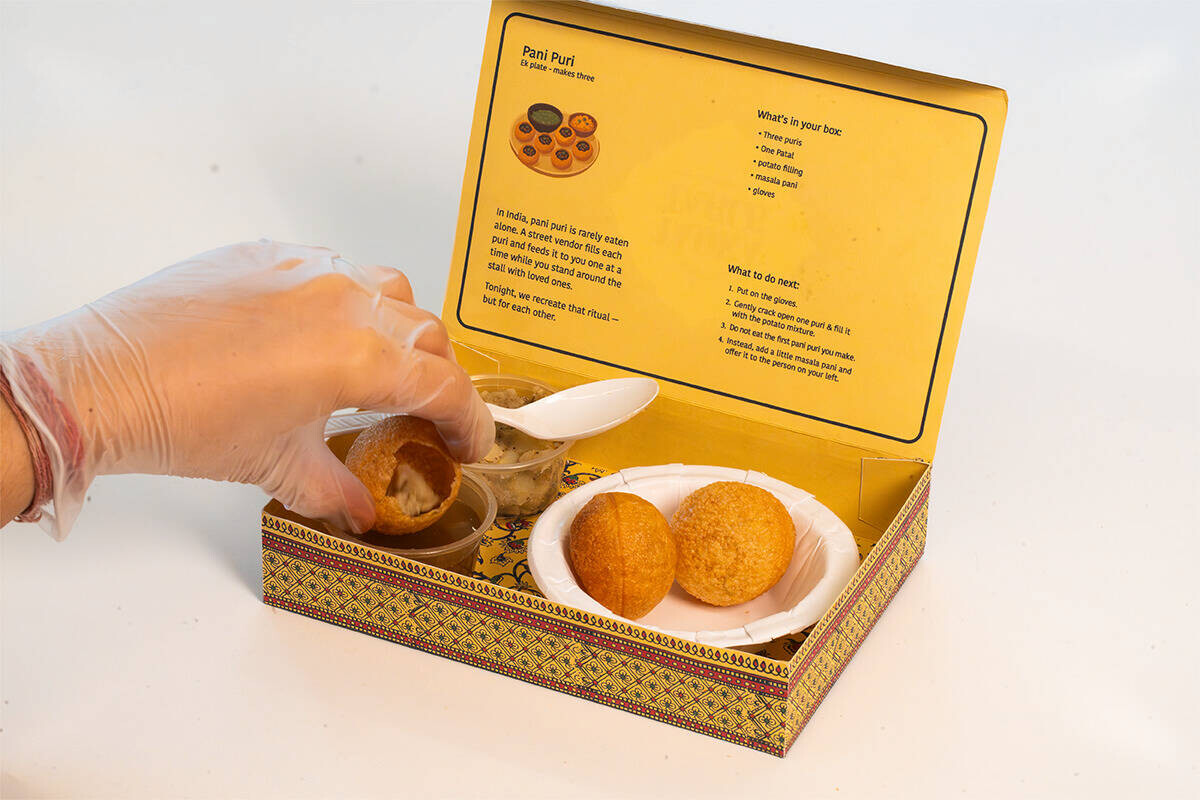
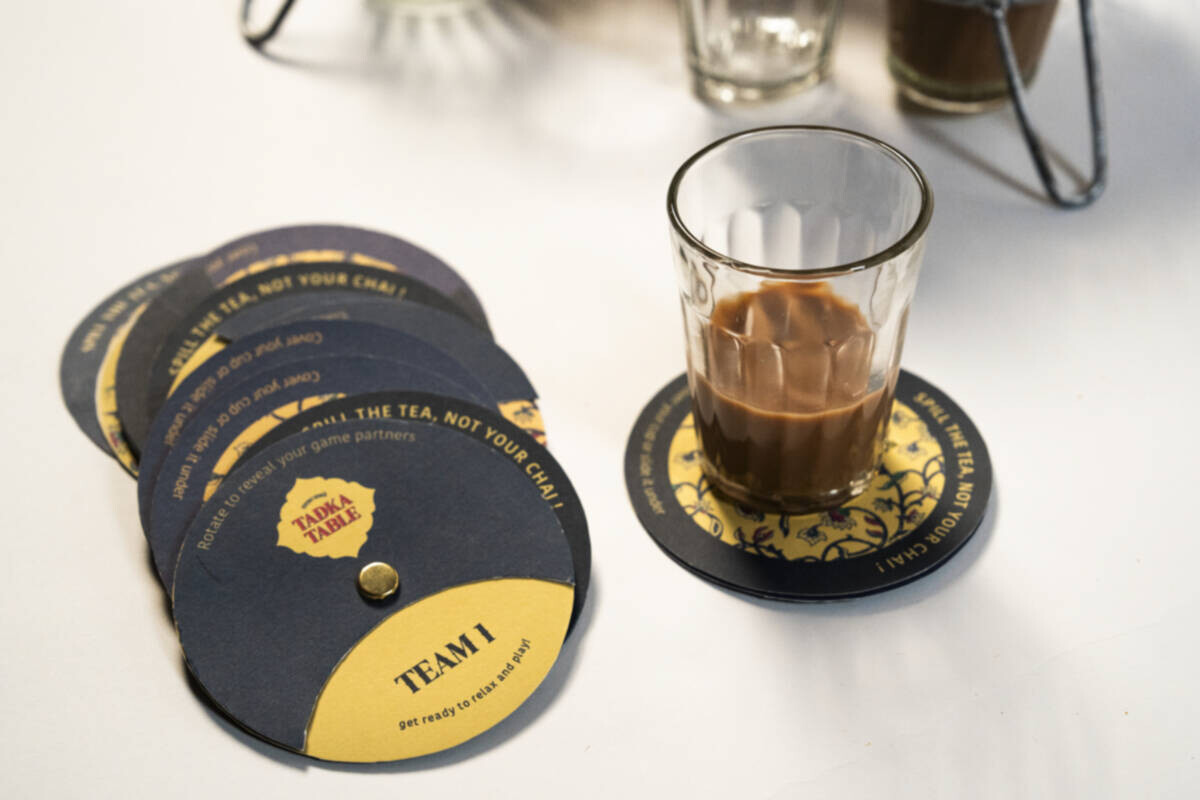
Tadka Table is an immersive dining experience that explores how South Asian food rituals function as nonverbal expressions of care, memory, and identity. Inspired by my own relationship to cooking, family meals, and the cultural rituals surrounding hospitality in India, the project examines how acts such as preparing tea, sharing namkeen, or cooking a favorite dish communicate belonging and affection, particularly within immigrant contexts.
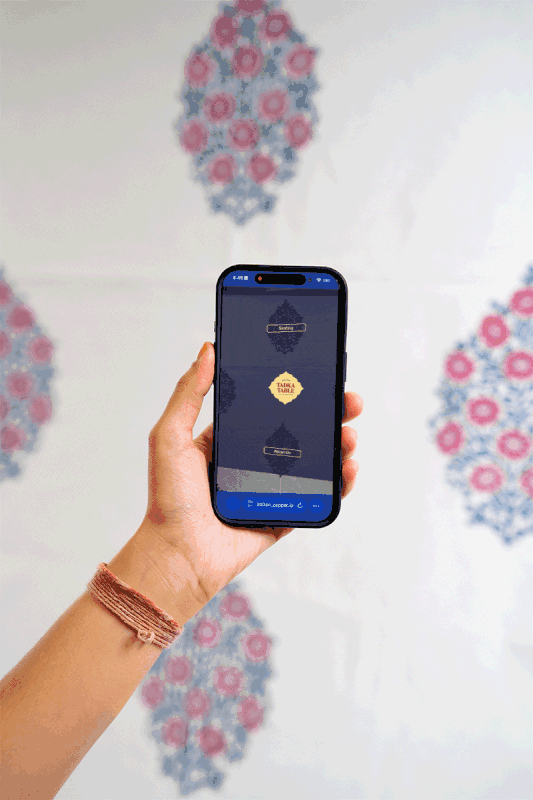
The project takes the form of a participatory event supported by a collection of designed artifacts. Guests are first welcomed through an augmented reality interaction embedded within custom block printed panels, which introduces the experience and guides them through the evening. A chai corner offers personalized chai and snacks, referencing the cultural role of welcoming guests into a home. The experience then transitions into a four player card game inspired by traditional card playing culture before or after meals, where participants cook dishes by collecting ingredient cards and navigating playful disruptions. The game includes illustrated cards, packaging, game mats, and an accordion style guide.
A second augmented reality interaction reveals the final seating and menu, leading into a shared dinner based on dishes guests requested beforehand. Interactive prompts, notes hidden in napkins, and moments for guests to leave messages encourage reflection and exchange during the meal.
Alongside the event, an accompanying object book documents cookware, dining tools, and everyday artifacts that shape South Asian food culture. Through graphic design, storytelling, and participatory rituals, Tadka Table highlights how food practices communicate cultural memory and care beyond language.