Find The Earth
Amber Pjongluck
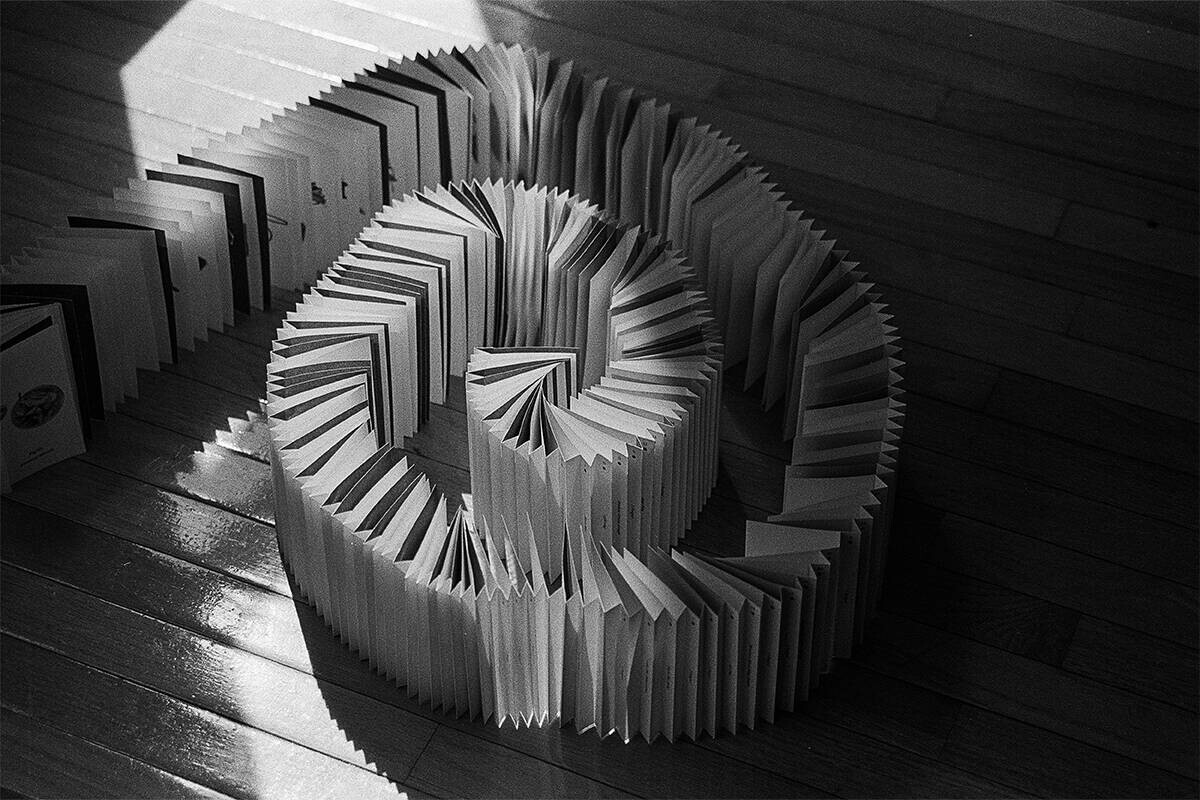
"I had lived in books and imagination, so my journey into my self was different. I had to find the earth" - Anaïs Nin.
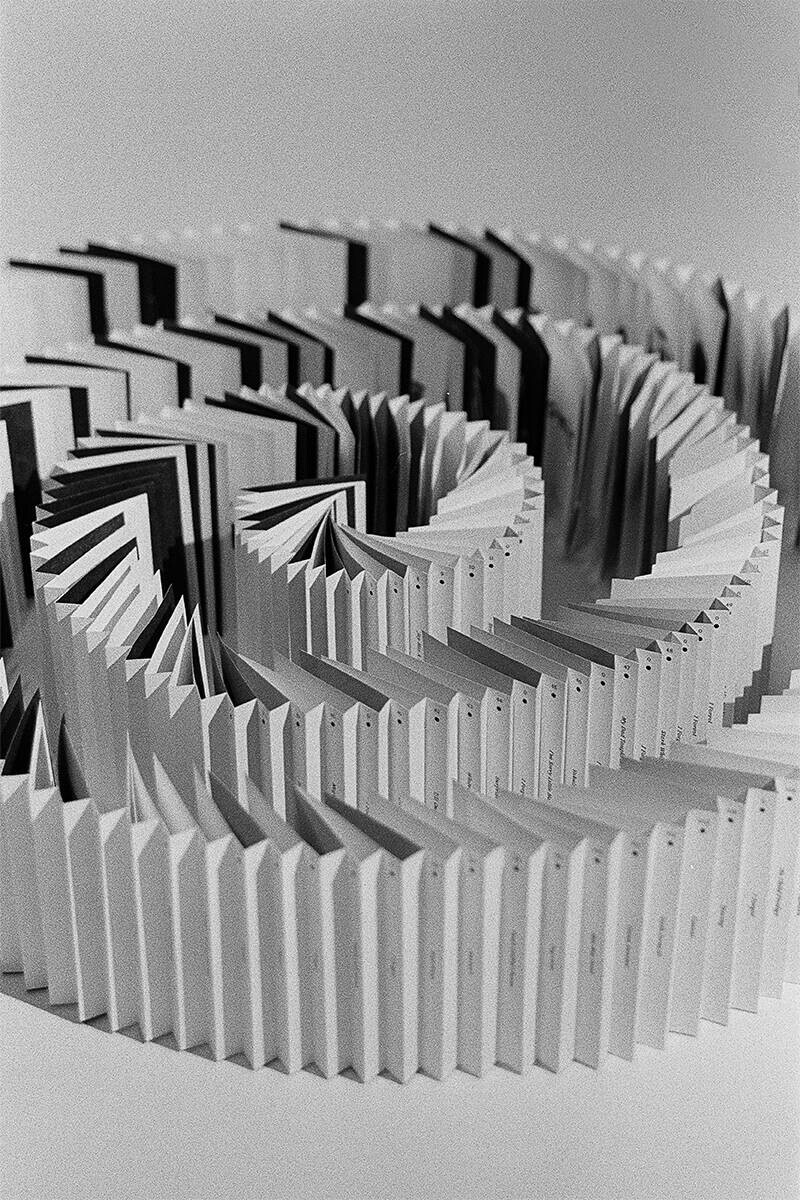
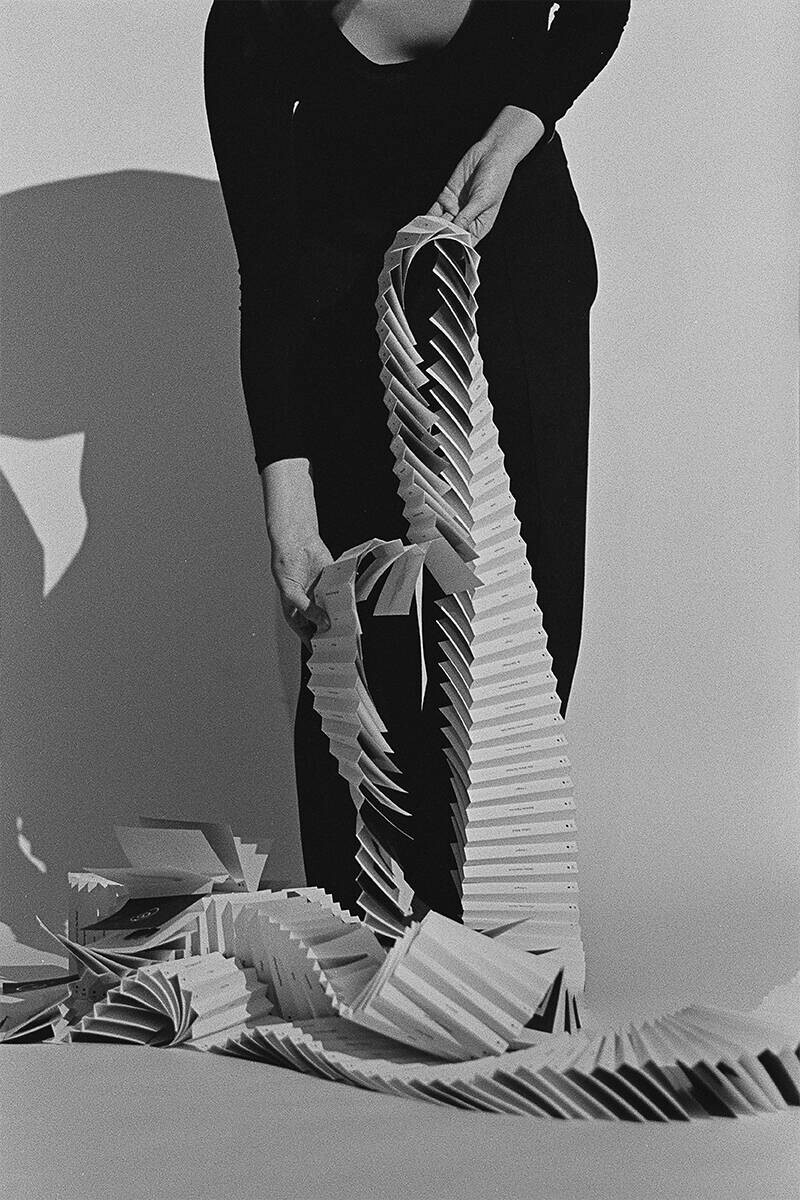
Find The Earth is a living archive led by the instinct to collect and compartmentalise. The spiral book is symbolic in its form: lingering and encircling, it serves as a non-linear visualisation of time. A pliable and continuous coil.
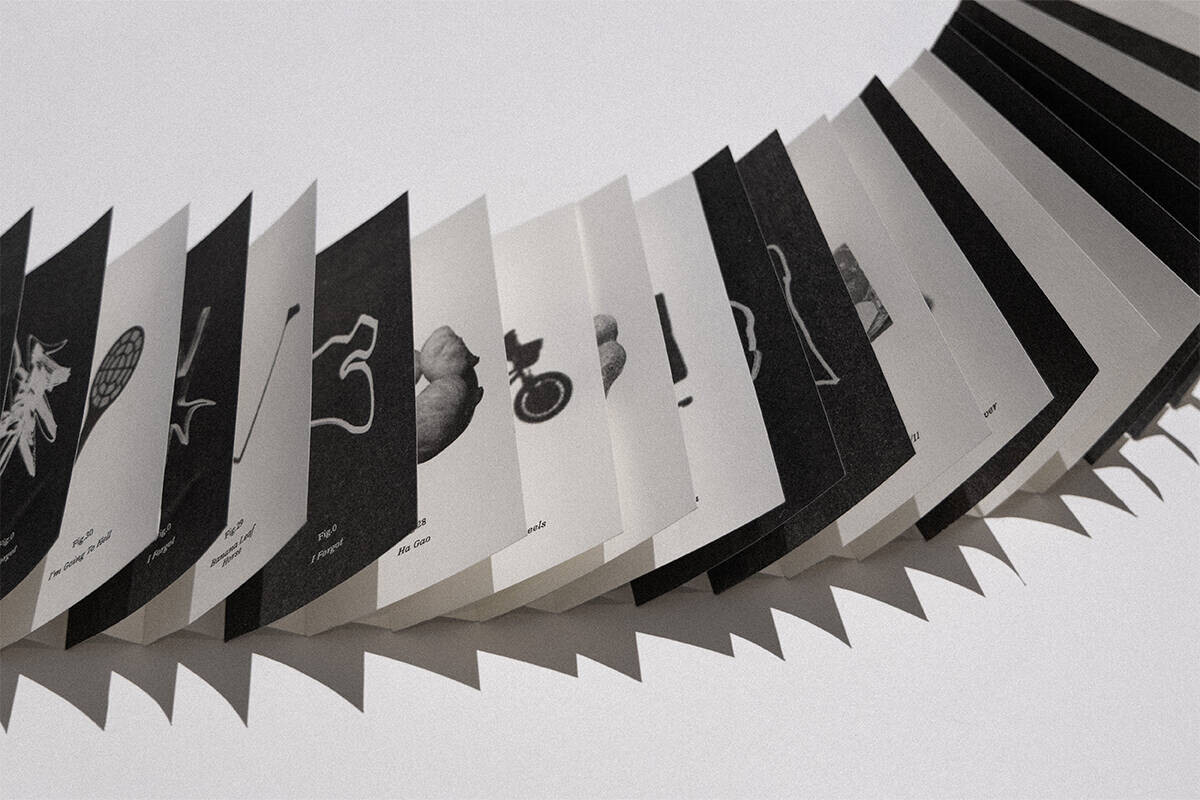
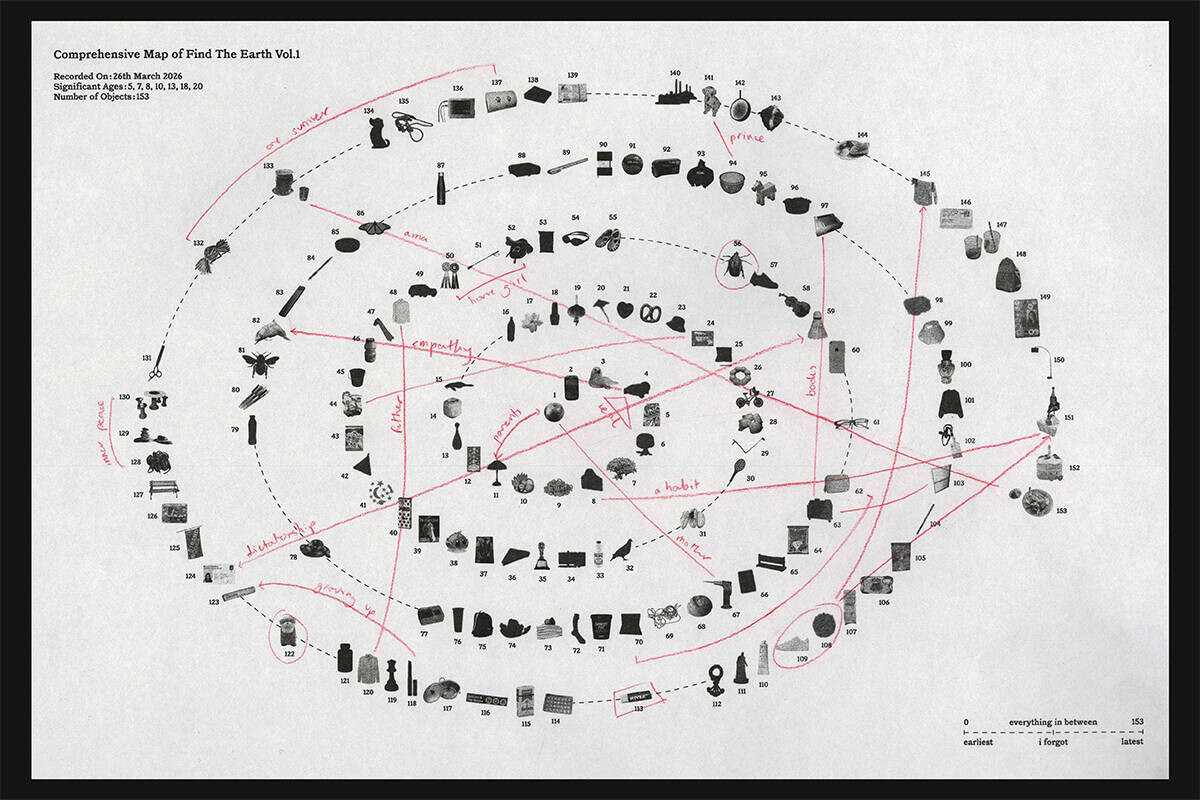
While the spiral serves as a physical home for the artefacts, the map draws connections across versions of selves and time. Each object is drawn from memory, and categorised into a different stage of decay: remembered, forgetting, and forgotten. The missing gaps are filled by hand-drawn shapes unidentifiable to viewers, yet familiar to my hand.
Find the Earth acts as storage for memories, an attempt at reconciliation between the past and present. It's eternally incomplete, unreliable and detached. But at its core, it's a love letter for the forgotten and the mundane.