Naming Women: A Language Evidence Archive
Ruowen Li

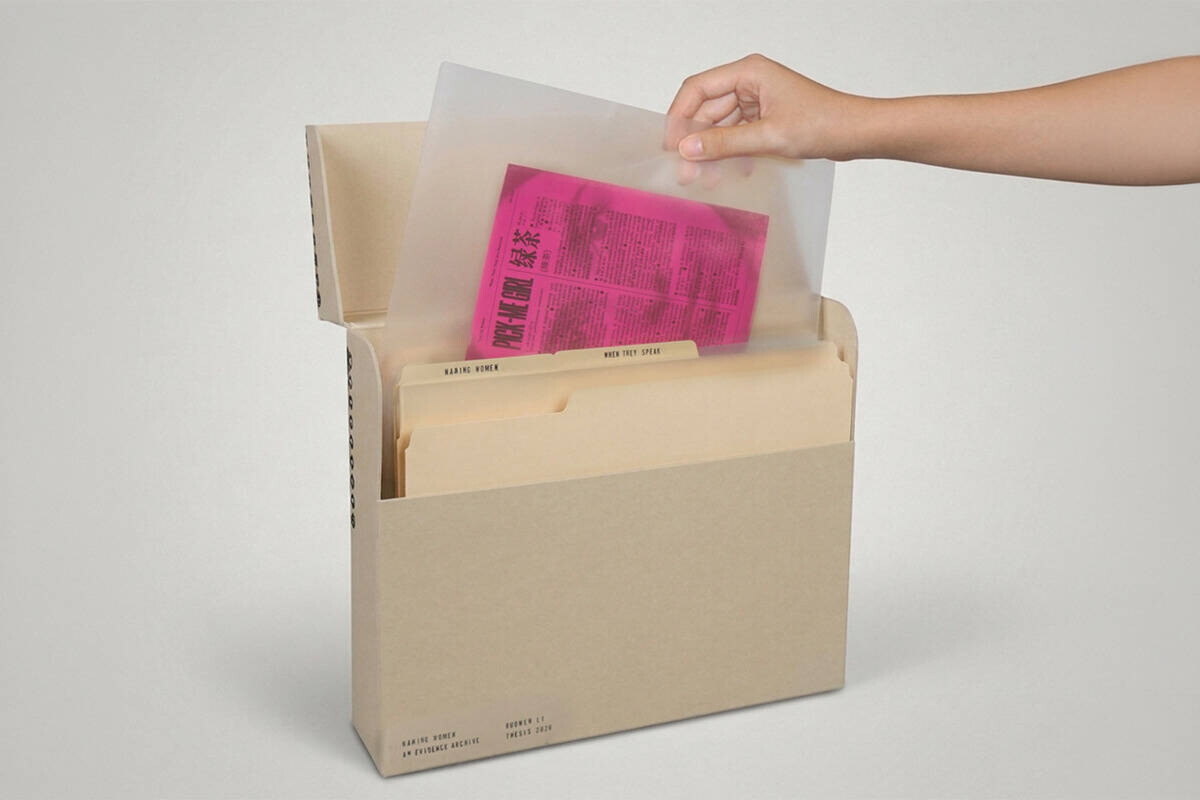
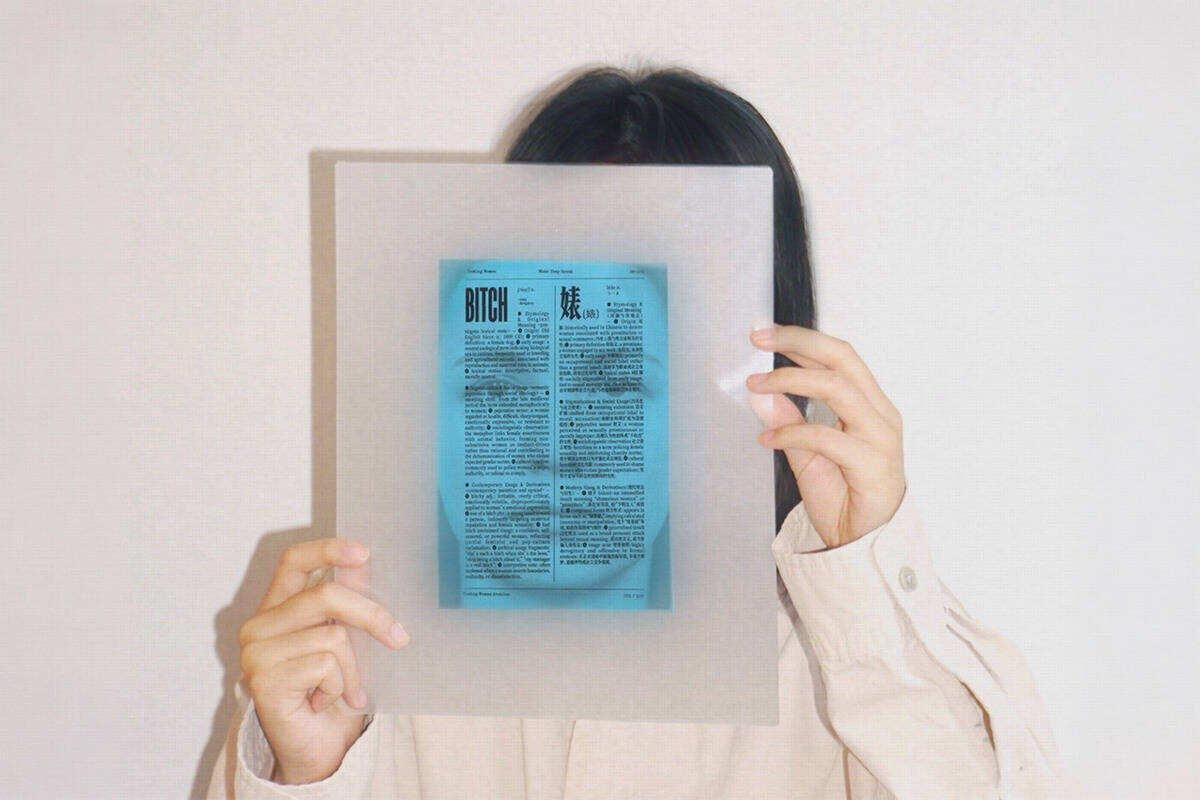
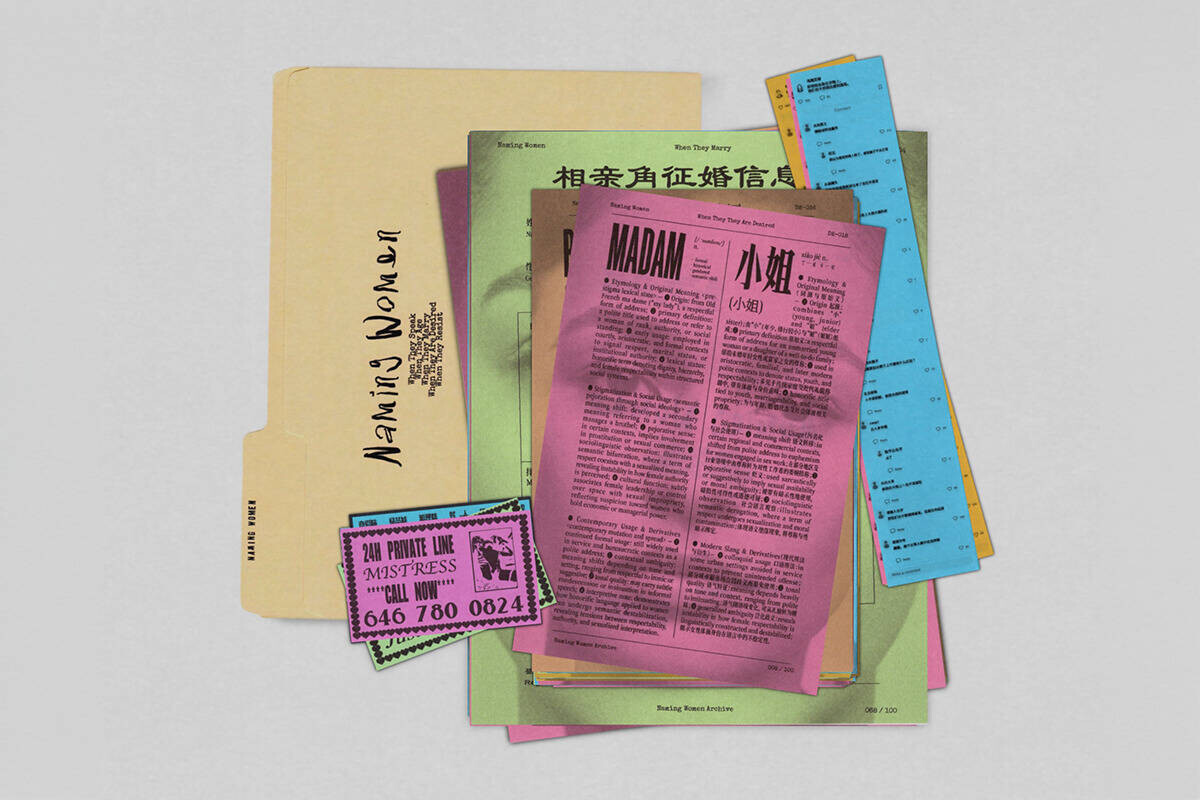
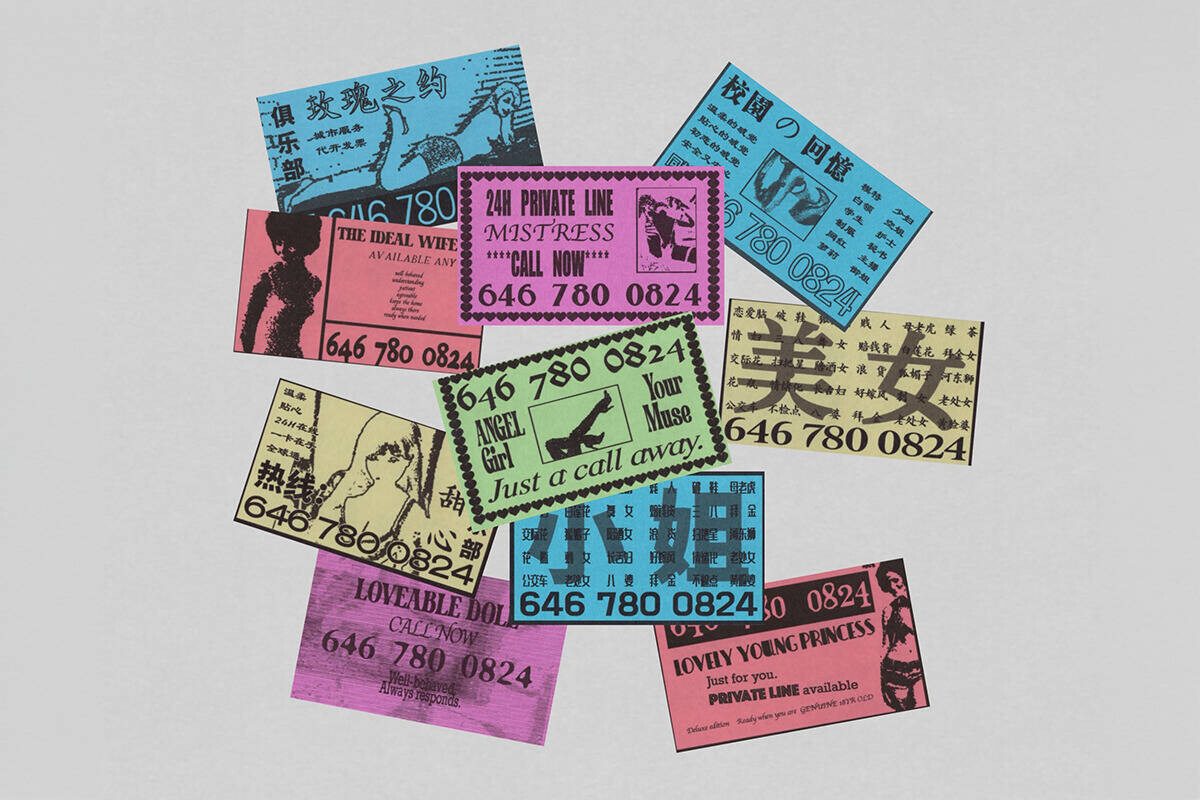
This project is an archive of linguistic evidence that I created and curated, consisting of 100 individual pieces. It examines how language shapes, distorts, and regulates perceptions of women across different cultural contexts.
The project takes the linguistic phenomenon of “naming women” as its point of departure, examining how language classifies, regulates, and defines women across social contexts. These forms, drawn from familiar communicative structures, operate collectively as a system that is continuously repeated and socially normalized.
Each piece adopts a familiar communication format, such as dictionary entries, street cards, matchmaking forms, and diagnostic-style reports. While these formats appear neutral, they carry embedded social values and power structures. By reconstructing these forms, the project reveals how everyday language quietly participates in defining and disciplining women.
Many of the words included in this archive were not originally negative. However, through prolonged use and cultural influence, their meanings have gradually shifted, becoming sexualized, derogatory, or stigmatized. Through these “evidences,” the project traces this process of semantic transformation, presenting language not as a fixed system, but as something continuously shaped by society and ideology.
The archive also extends into a sonic dimension. By calling a phone number printed on selected materials, listeners can access excerpts of spoken language drawn from film and everyday contexts, emphasizing tone, repetition, and affect beyond the written word.