A Doctrine of Us
Sai Vaishnavi Ramachandran
Across history, doctrinal “truth” has been framed in ways that turn difference into deviance—used to justify exclusion, coercion, hate, and violence. Yet doctrines also hold the potential to create a shared language of belief.
A Doctrine of Us begins with a question: how do we build a system rooted in love instead of fear? In a world where language is often wielded to divide, this project imagines belonging as communal, transparent, and tender. It is an attempt to redefine an “us” in an age where identities are weaponized, human worth is entangled in politics of power, and rules shaped for us feel increasingly distant.
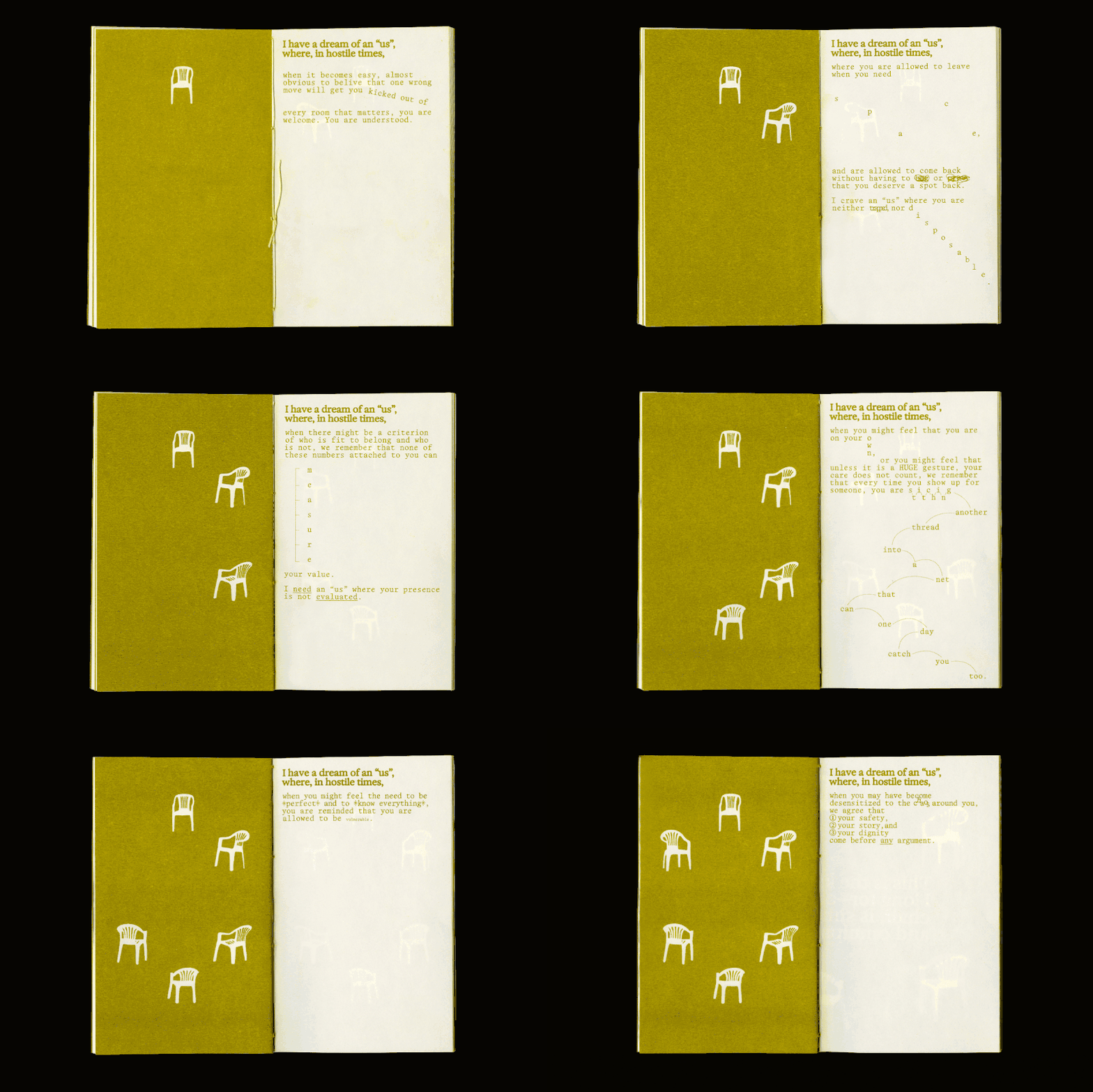
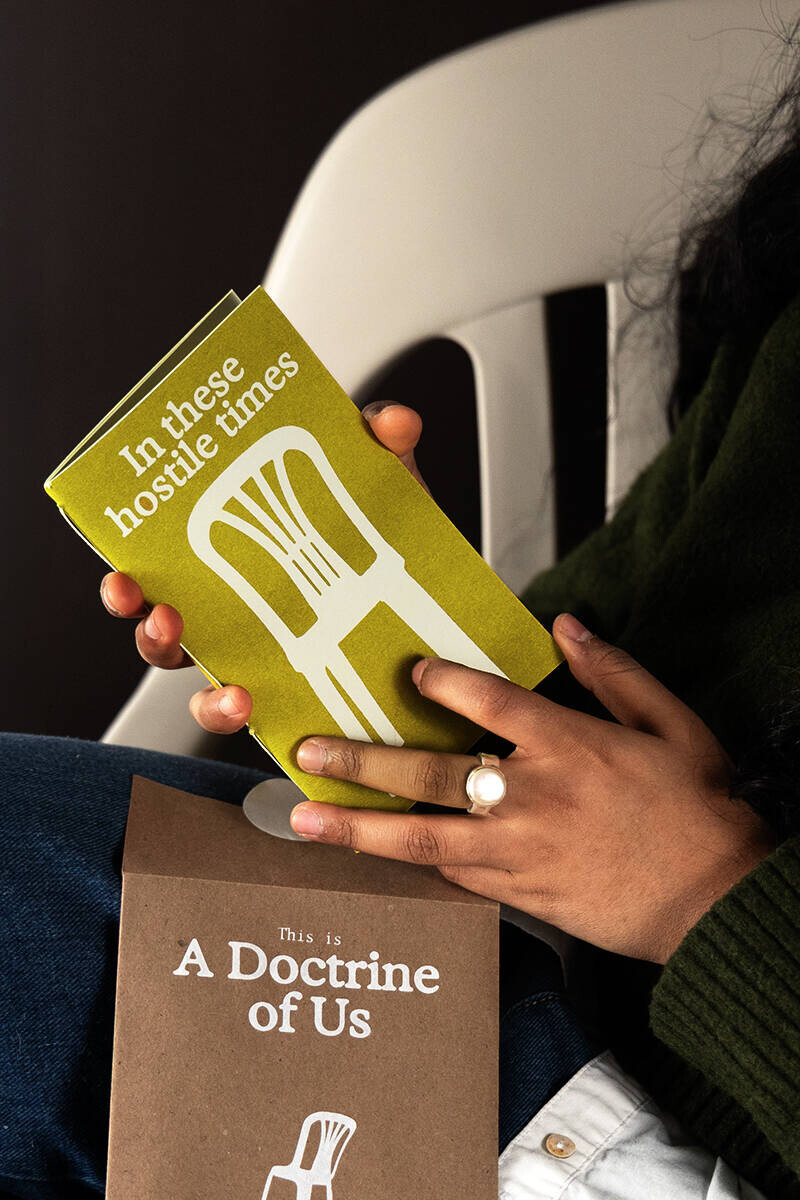
Using the visual metaphor of the iconic monobloc chair—inspired by the longstanding ones in my grandparents’ home—I see quiet resilience: a form accessible to all, permeating generations and shared beyond borders.
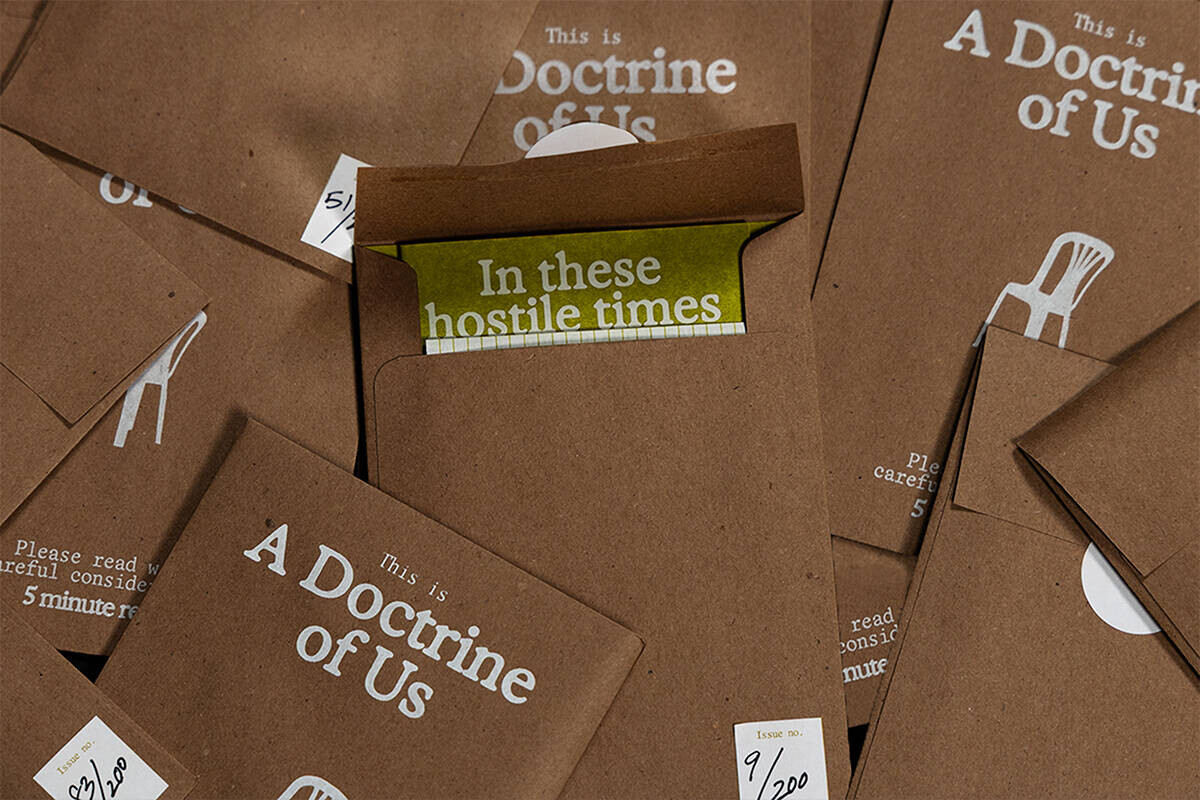
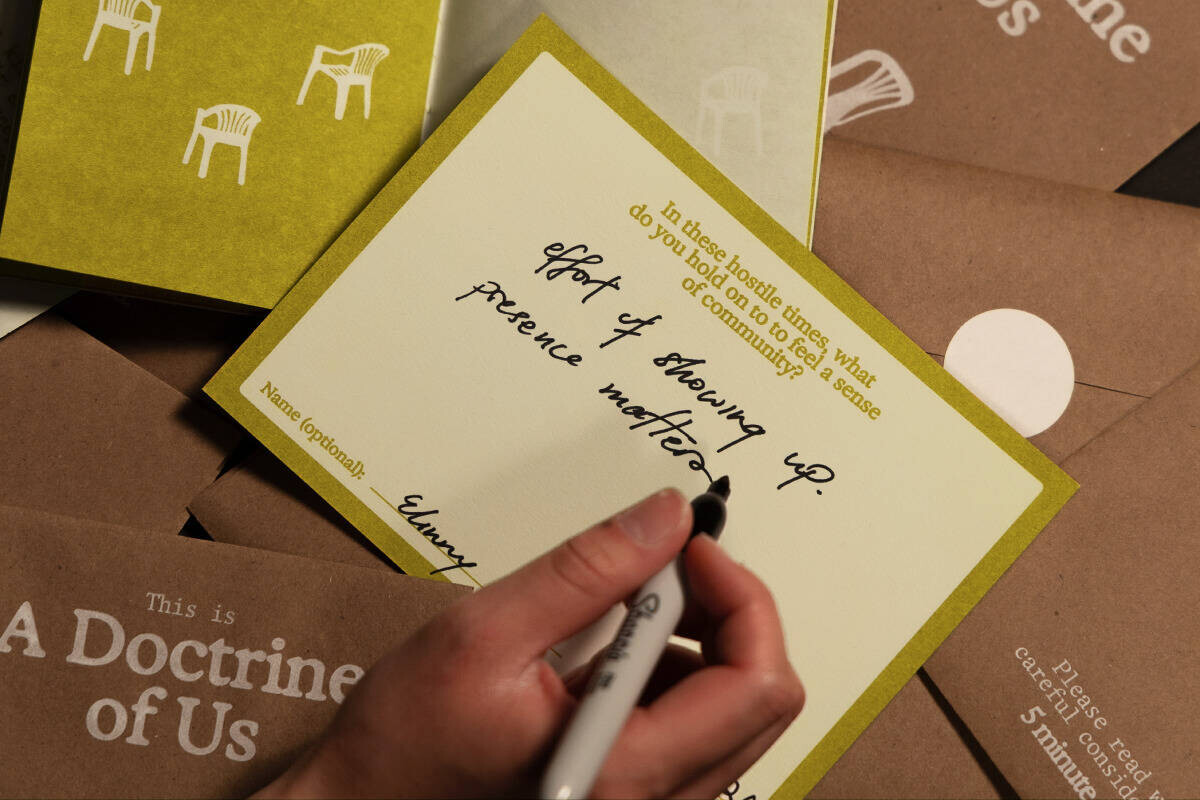
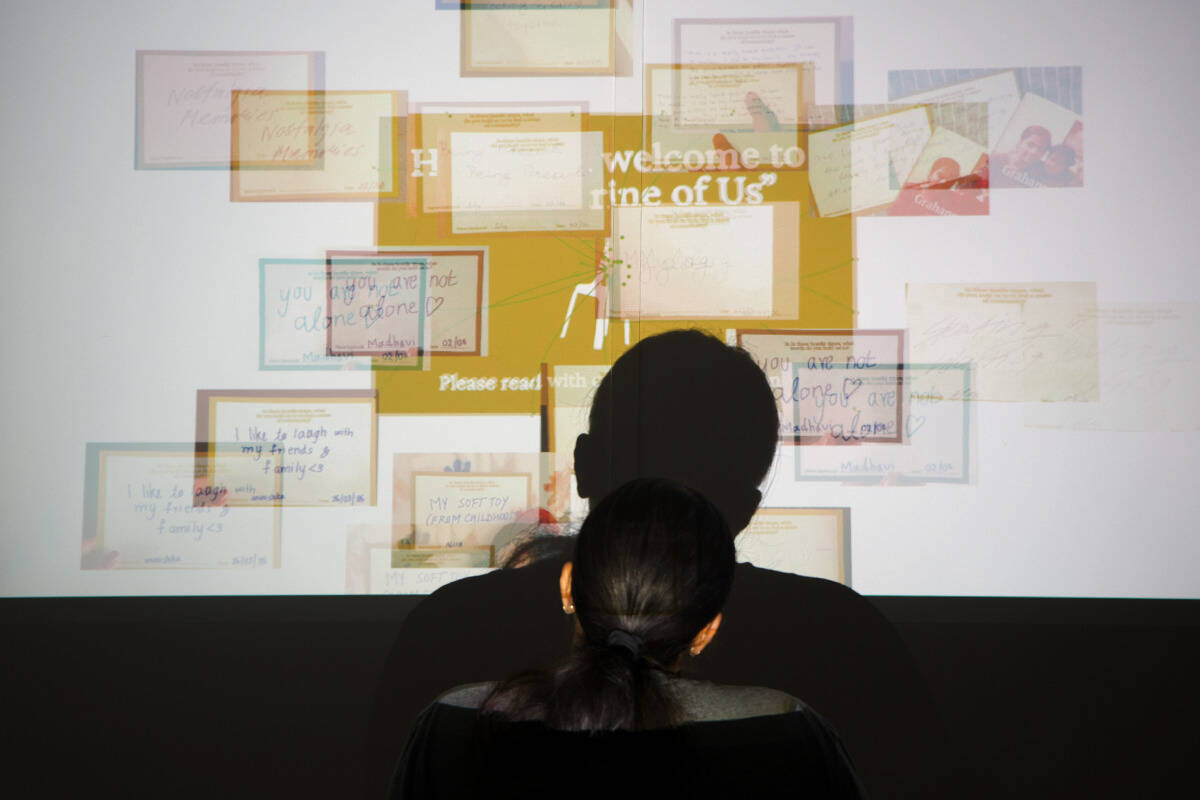
Extending this spirit, A Doctrine of Us is distributed through mass-produced envelopes that each contain three riso-printed components. The letter acts as a prelude, welcoming the reader into a space of reflection. The booklet voices my dream for an “us” in these hostile times, and the card invites the reader to add to this doctrine, threading it into an ever-growing web archive. The printing method historically associated with radical and sustainable printing echoes the project’s desire to circulate care at scale.
In these hostile times, A Doctrine of Us becomes both object and organism—a humble reminder that resilience is not isolation, but our capacity to keep returning to one another.